

.jpg?cropw=4096&croph=2654.2479700187387&cropx=9.695217308093677e-13&cropy=76.7520299812622&cropmode=pixel&quality=75#)




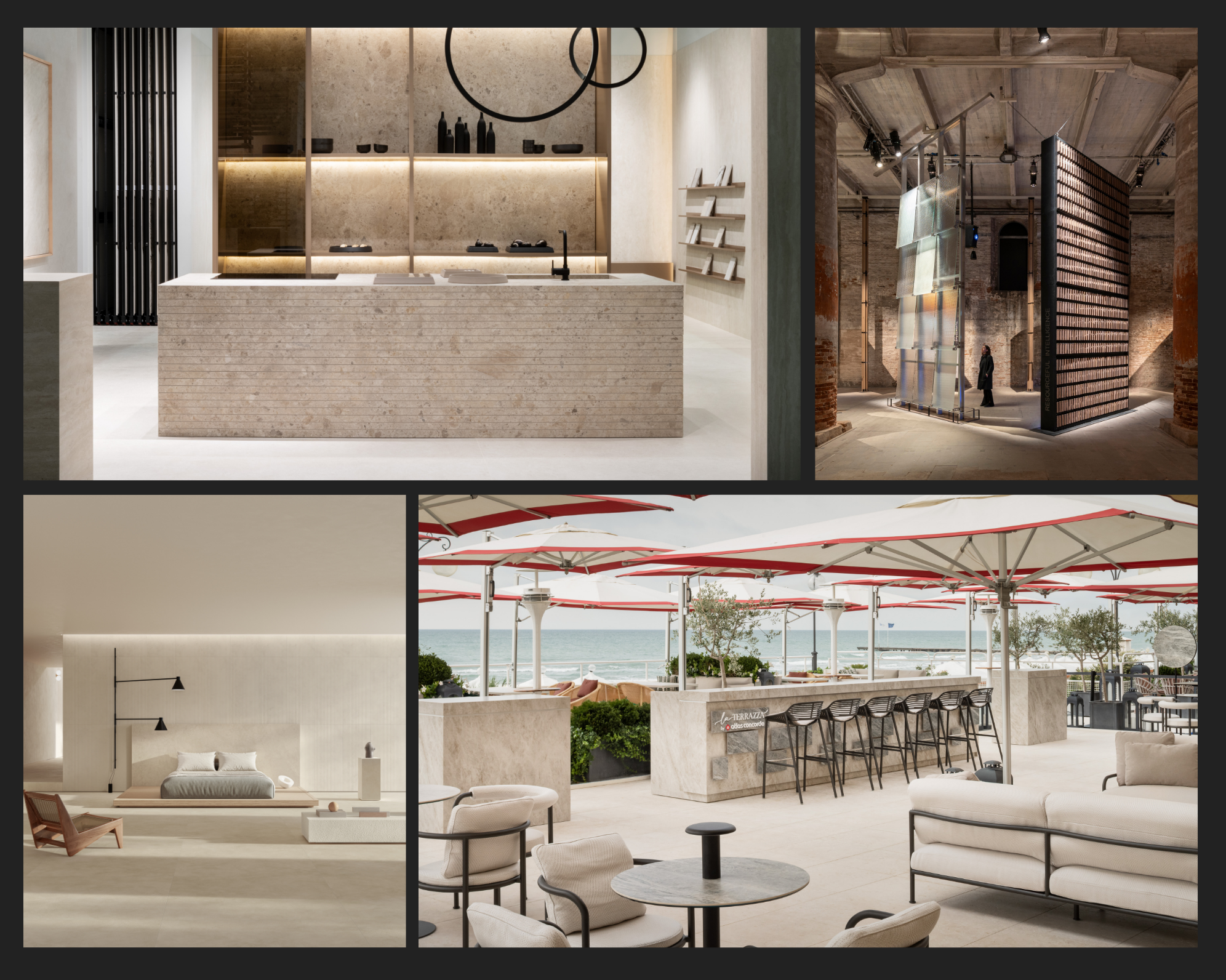

.tif?cropw=4036.303976681241&croph=2705.4159900062464&cropx=59.69602331875912&cropy=25.584009993753906&cropmode=pixel&quality=75#)
.jpg?cropw=4096&croph=2978.1919633562356&cropx=0&cropy=93.80803664376384&cropmode=pixel&quality=75#)

.jpg?cropw=2733&croph=2733&cropx=636.5439718837721&cropy=0&cropmode=pixel&quality=75#)


Why porcelain tile is a strategic choice for outdoor spaces

Outdoor & Garden
Outdoor porcelain tiles
how to choose the most reliable solution
25 June 2026
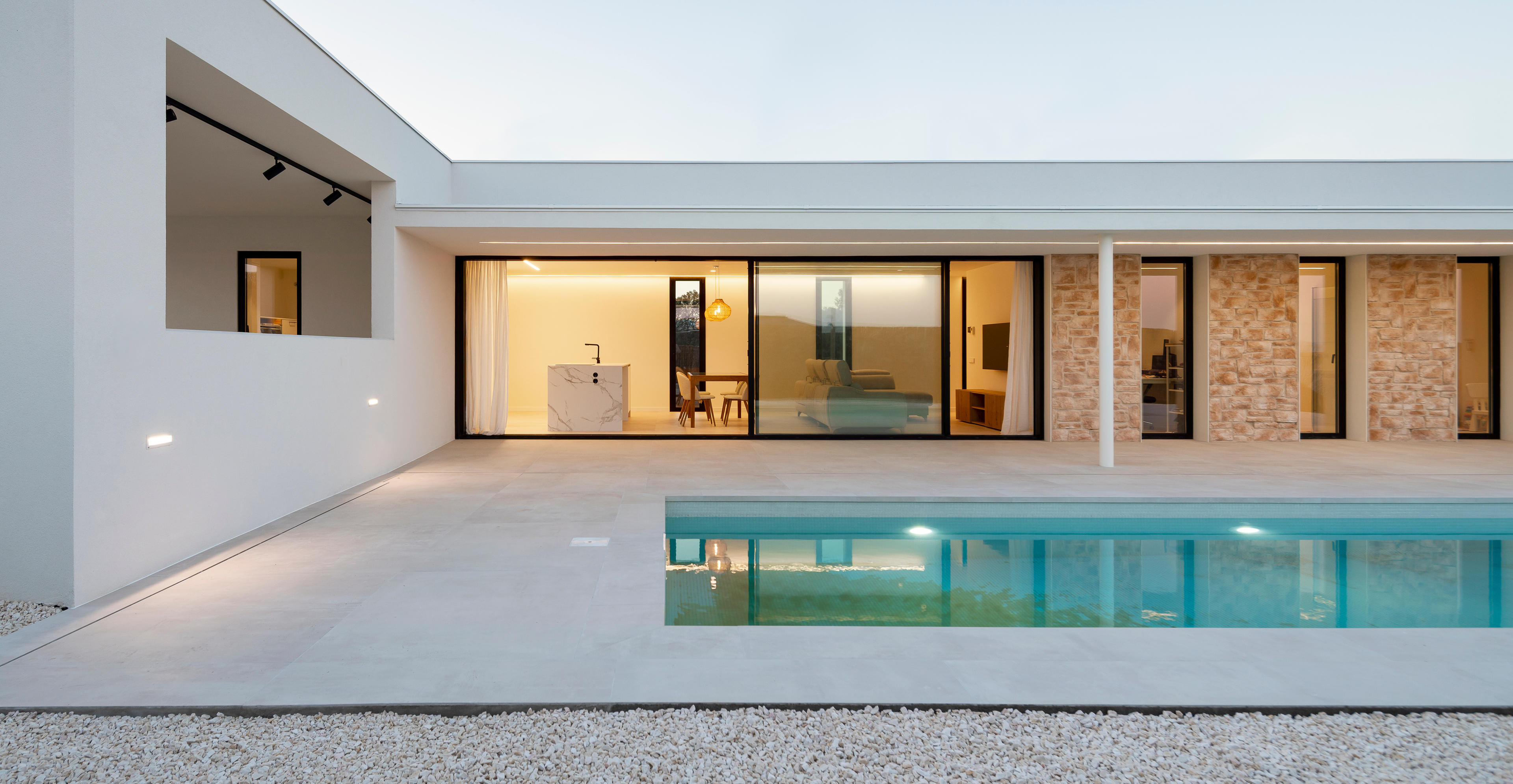
Choosing outdoor porcelain tiles means balancing aesthetics, safety, durability, and long-term performance. In terraces, gardens, pool edges, public spaces, hospitality settings, and high-traffic areas, flooring plays a key role in comfort, maintenance, and the overall perceived quality of a project.
Outdoor porcelain floor tile must perform under demanding conditions: rain, frost, humidity, sun exposure, thermal fluctuations, foot traffic, loads, and different installation requirements. For this reason, material selection is not only an aesthetic decision, but also a technical and design-driven one.
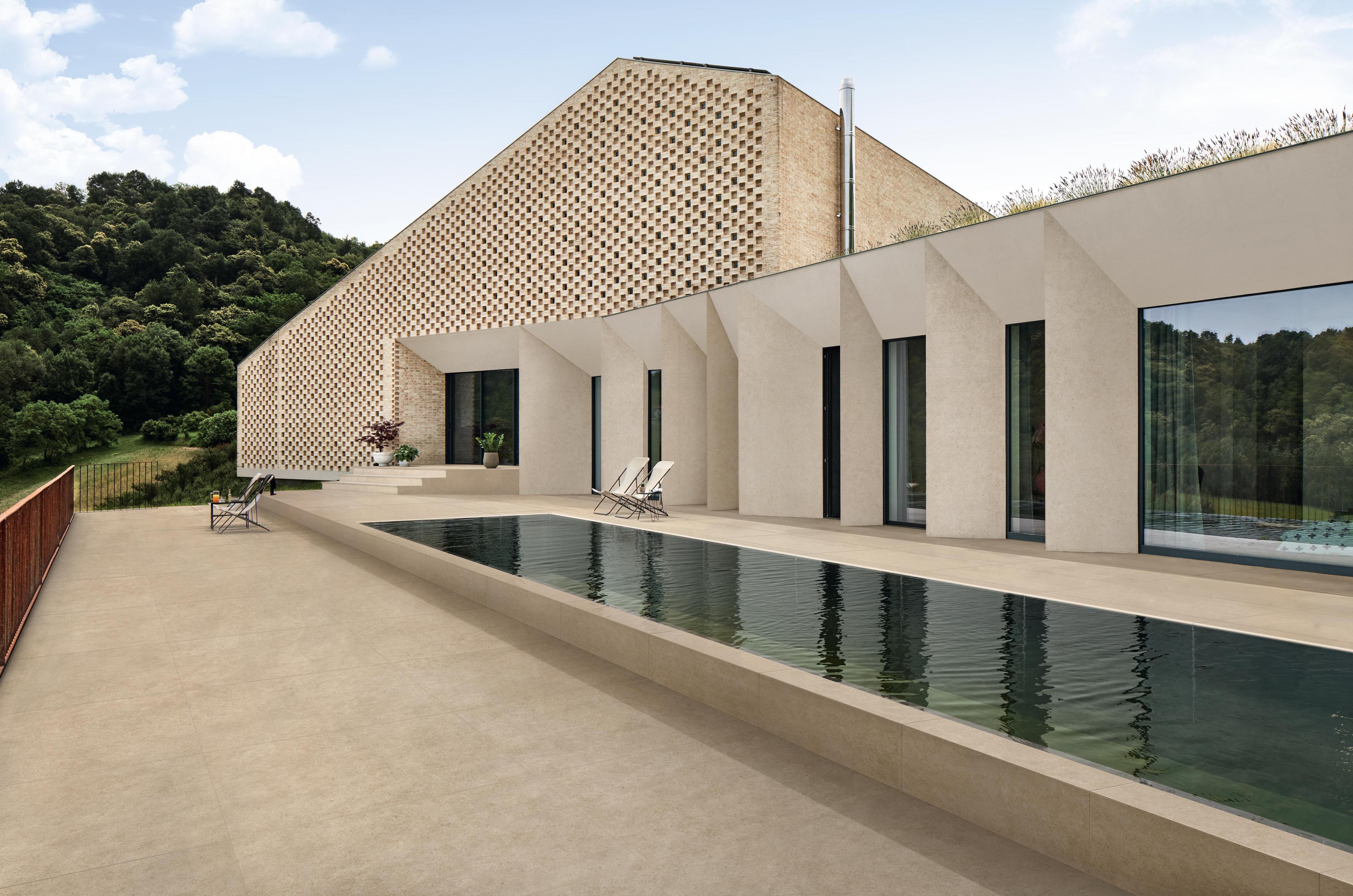
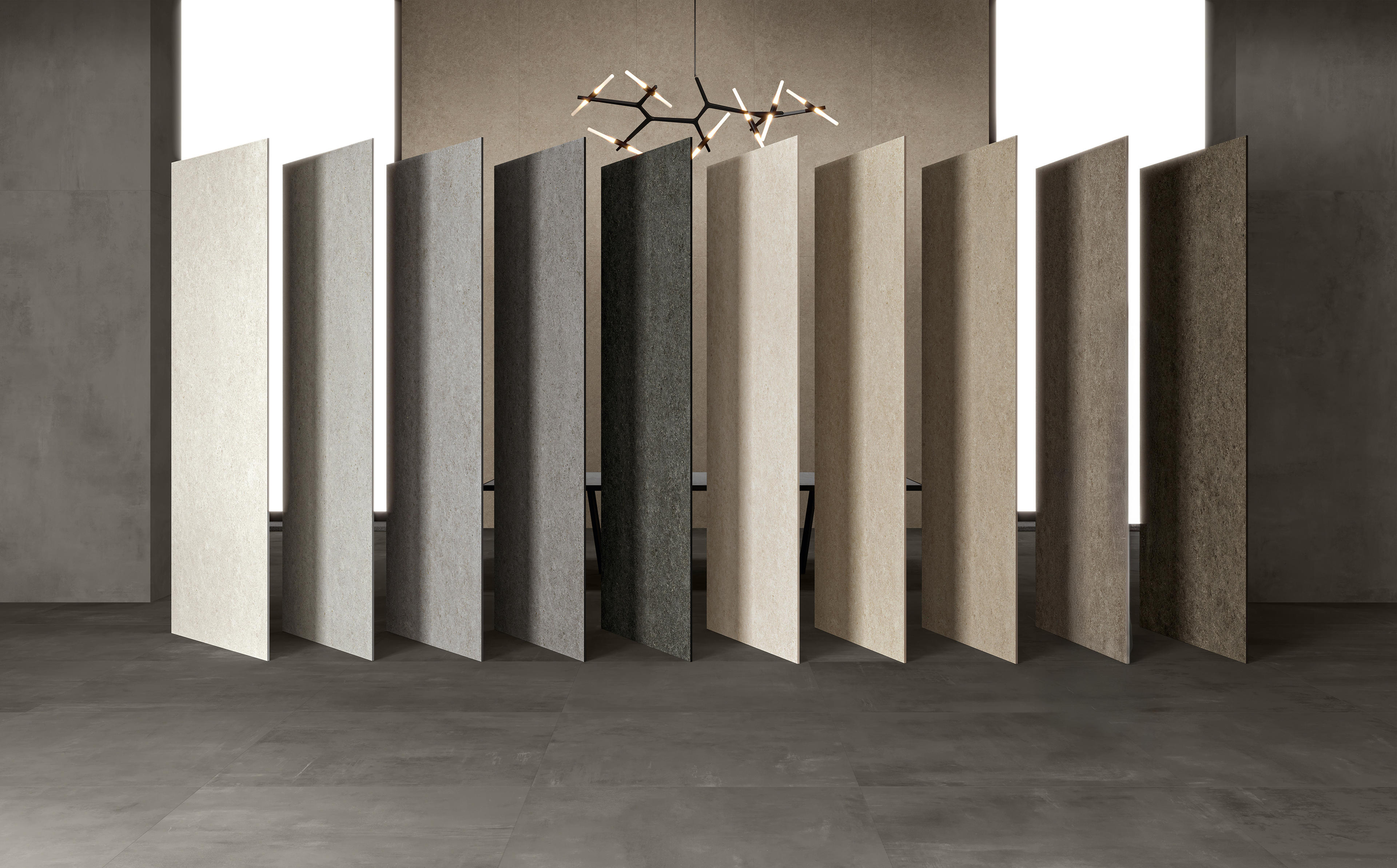
Atlas Concorde develops outdoor decorative tiles designed to support professionals and large-scale projects, offering a range that includes stone, concrete, wood, and marble effects, as well as non-slip tiles, dedicated thicknesses, and coordinated solutions that ensure continuity between indoor and outdoor spaces.
Outdoor porcelain tiles are a strategic solution because they combine the technical strength of a compact and durable material with an aesthetic versatility capable of interpreting natural and architectural materials: this makes it possible to create surfaces that are consistent with their context without sacrificing measurable performance.
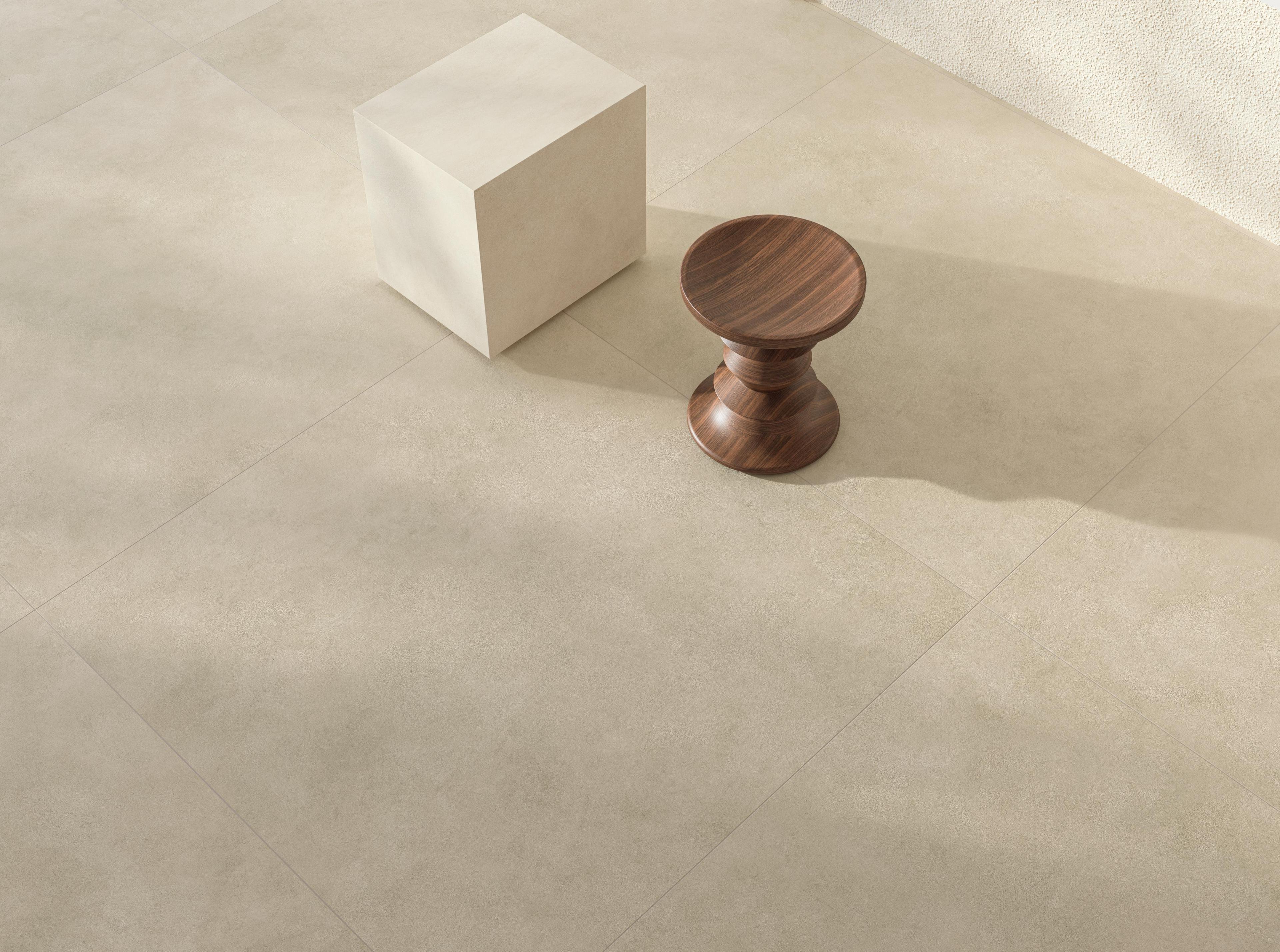
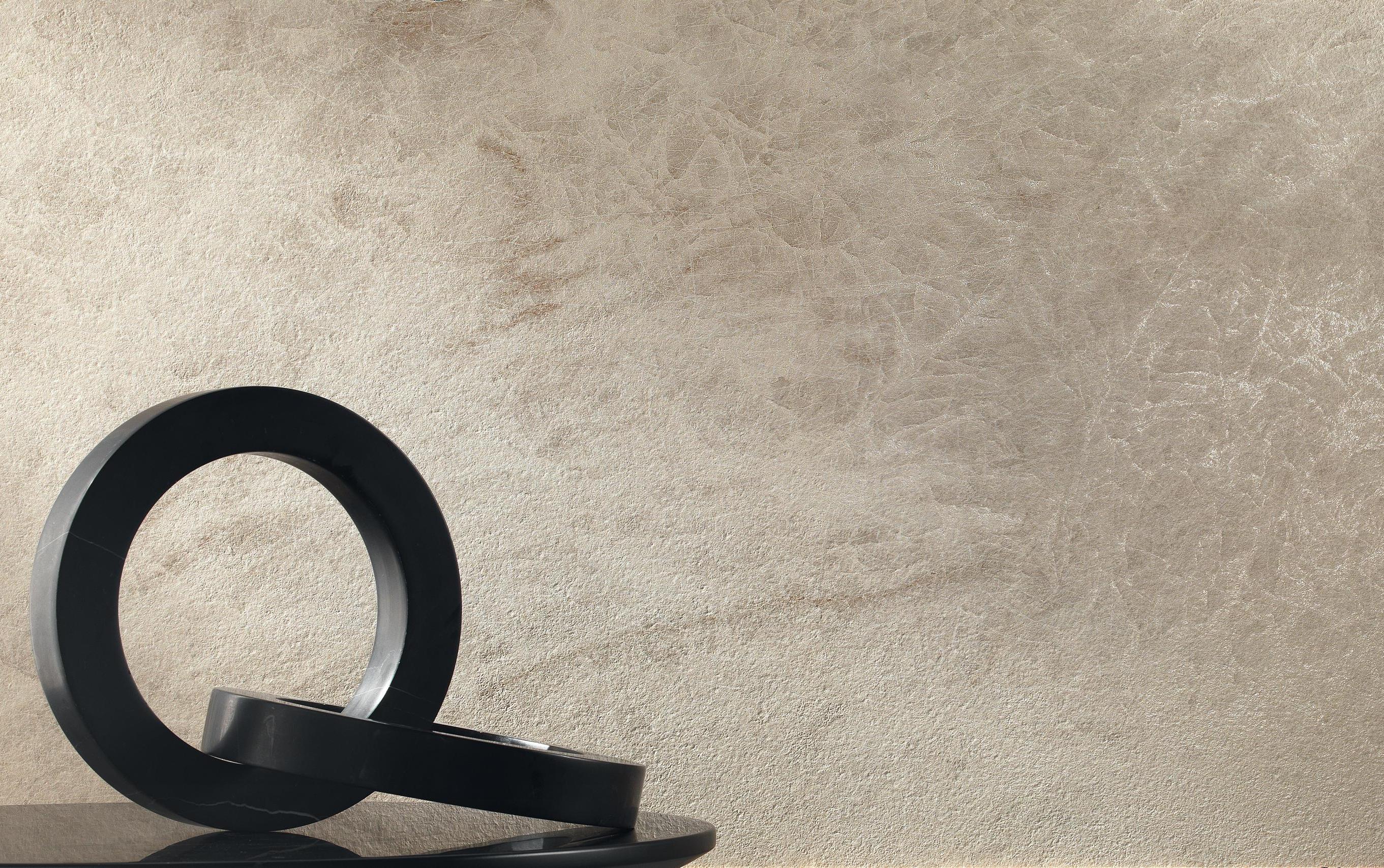
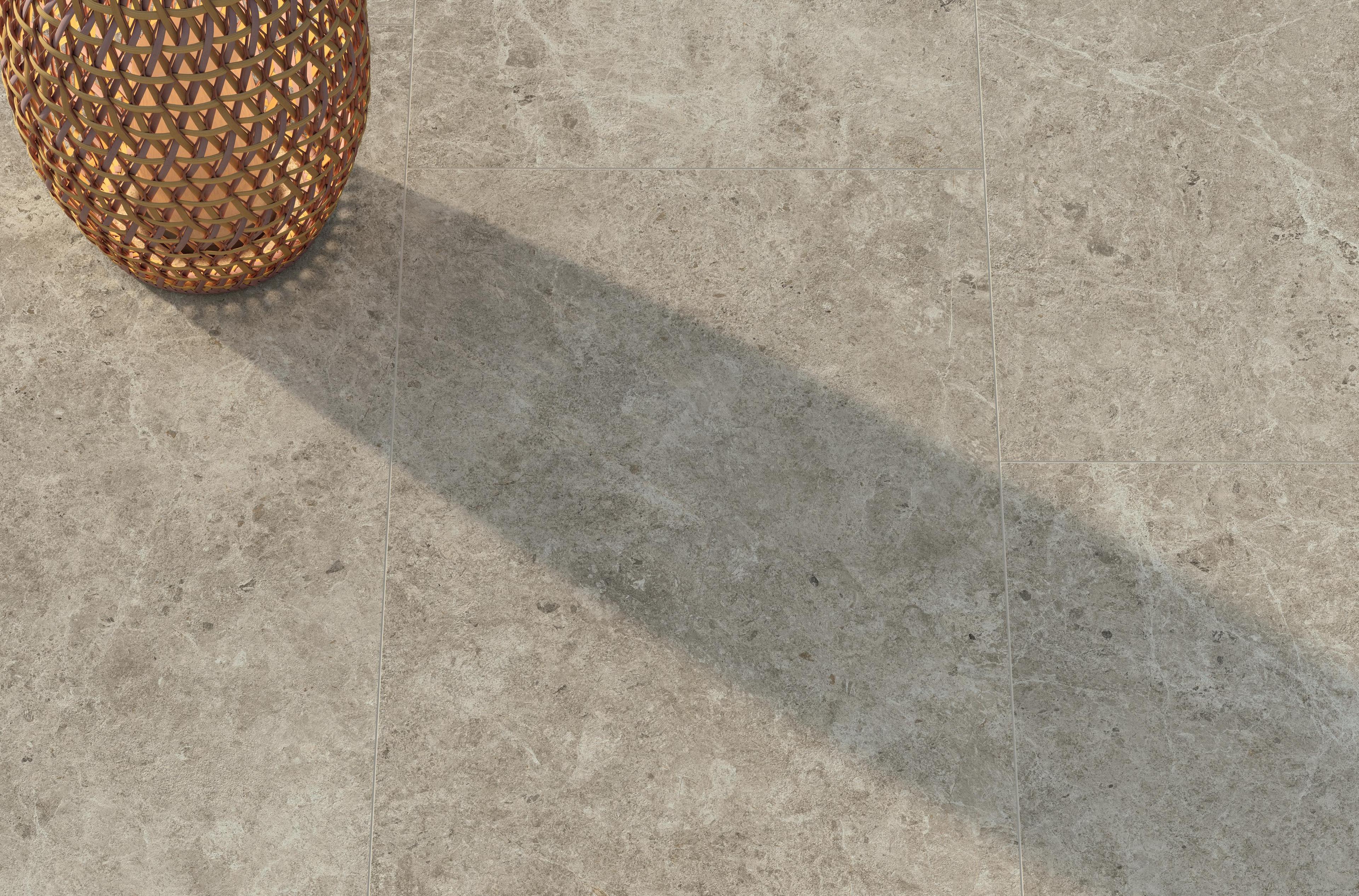
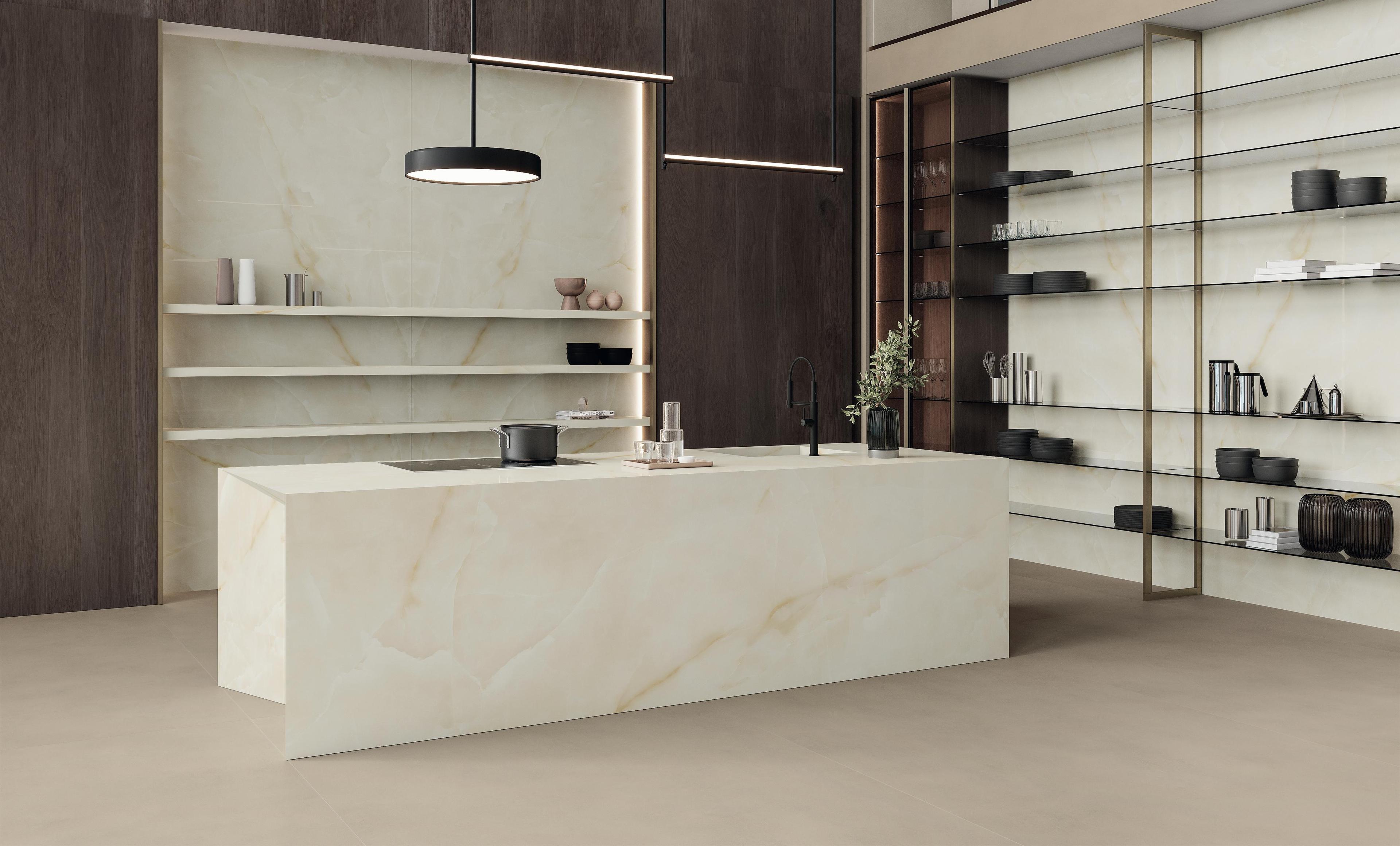
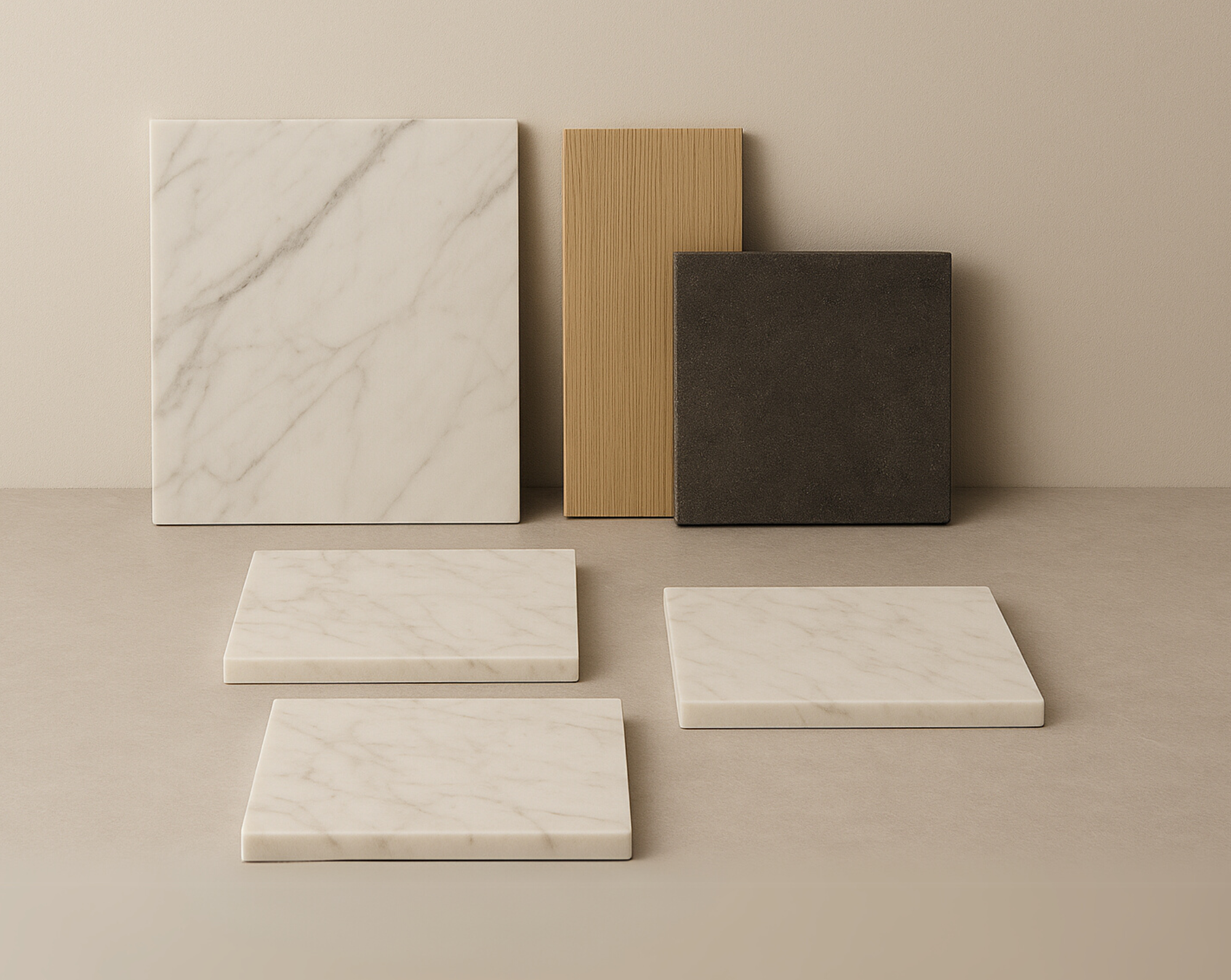
Compared to natural stones, stone look porcelain tiles offer greater control over format, finish, thickness, and performance. Atlas Concorde stone effect porcelain tiles reproduce veining, color variations, and material depth, overcoming many of the limitations of natural materials, such as absorption, staining, or flaking.
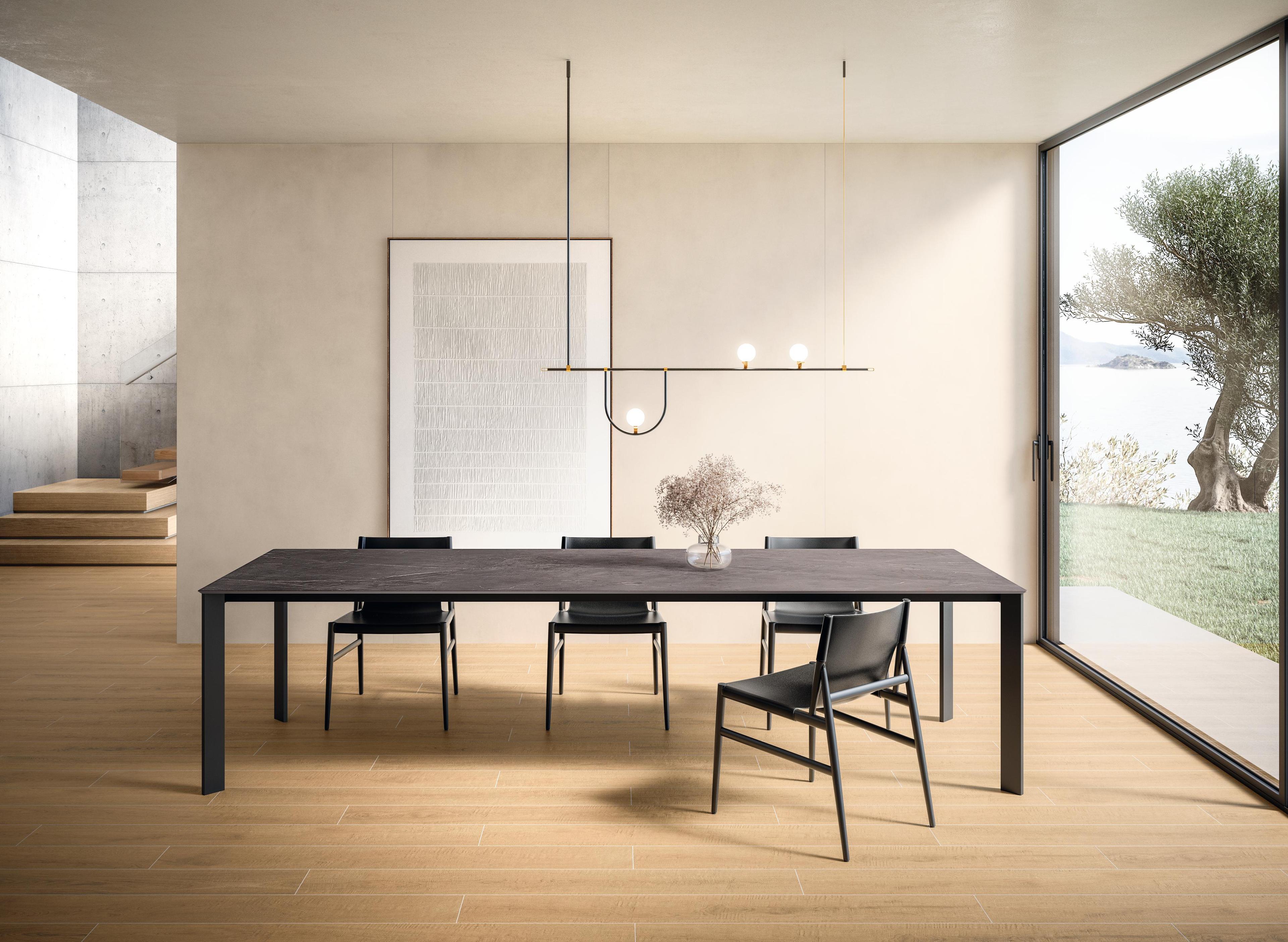
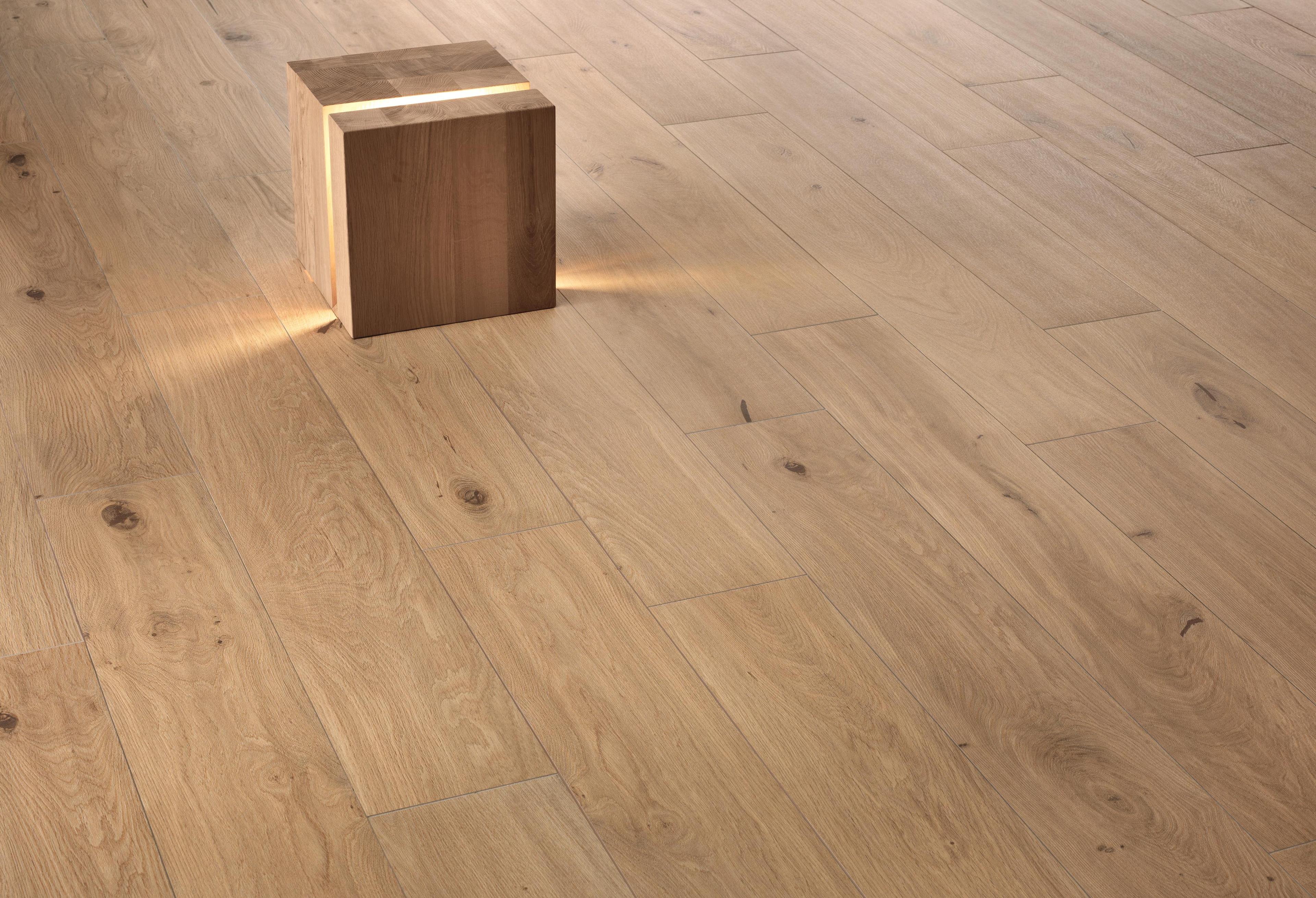
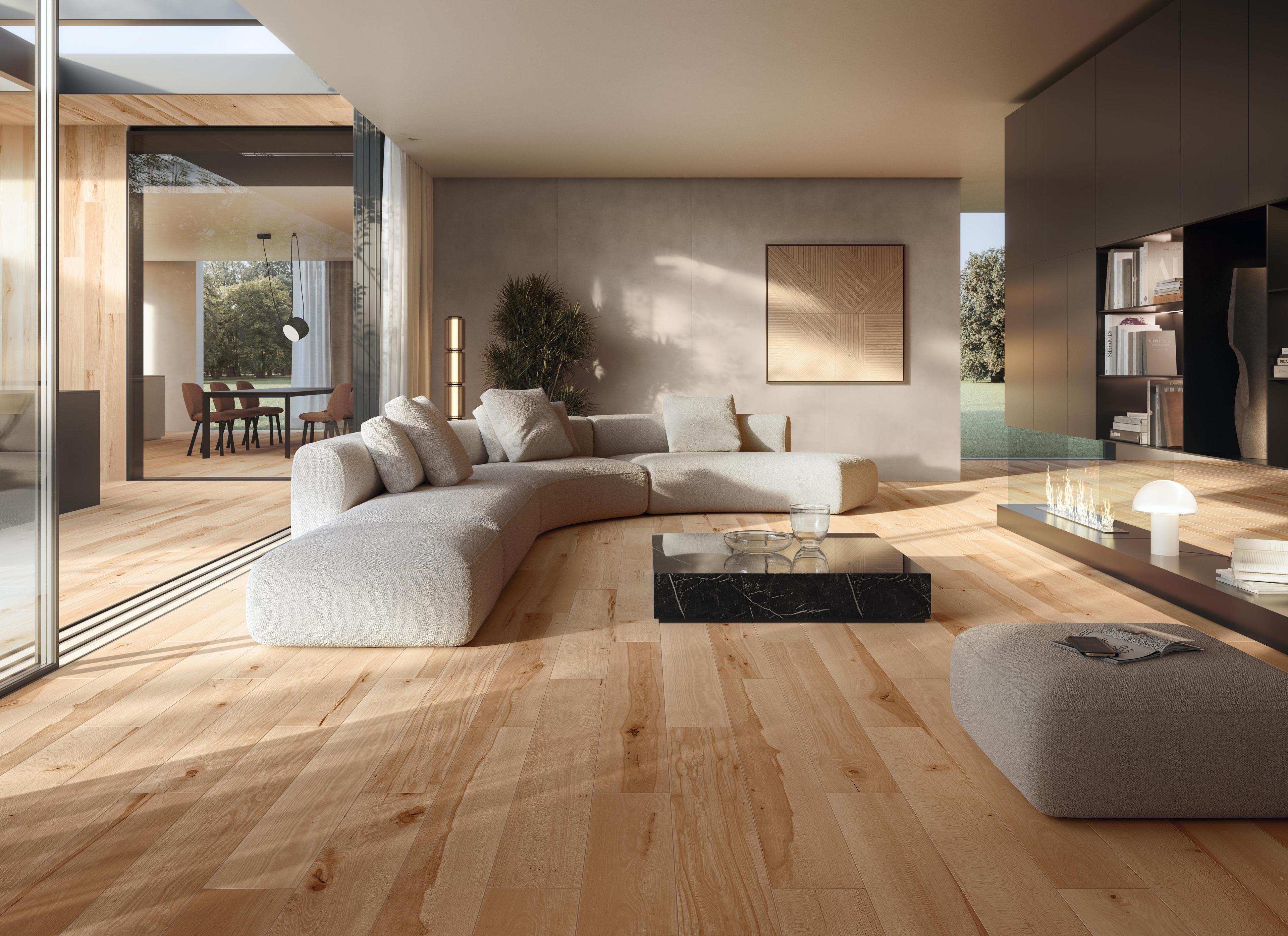
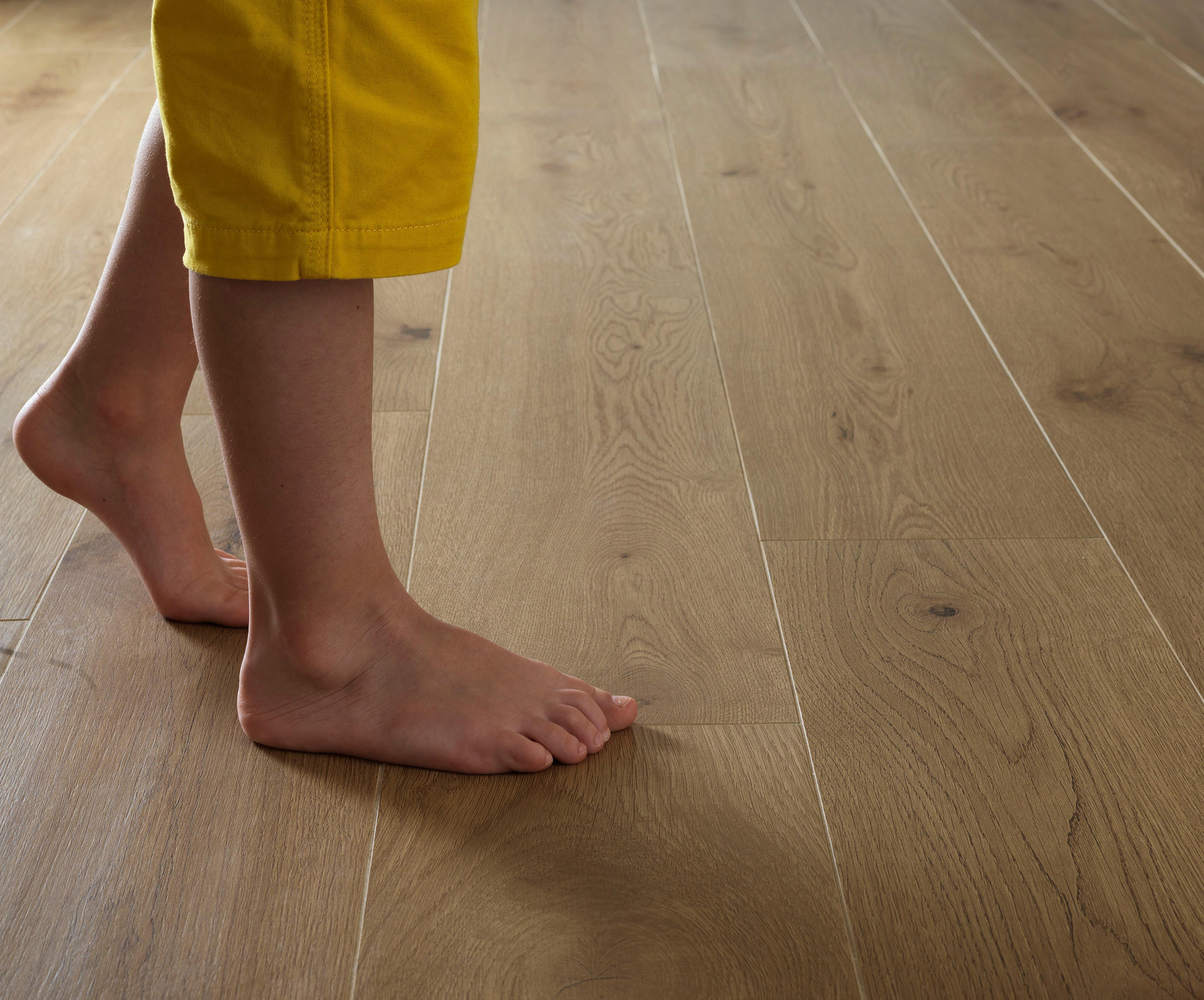
Compared to wood, wood effect floor tiles deliver warmth and a natural appearance while avoiding swelling, periodic maintenance, and alterations caused by moisture or sunlight. It is therefore also suitable for use as outdoors tiles on patios, terraces and pathways.
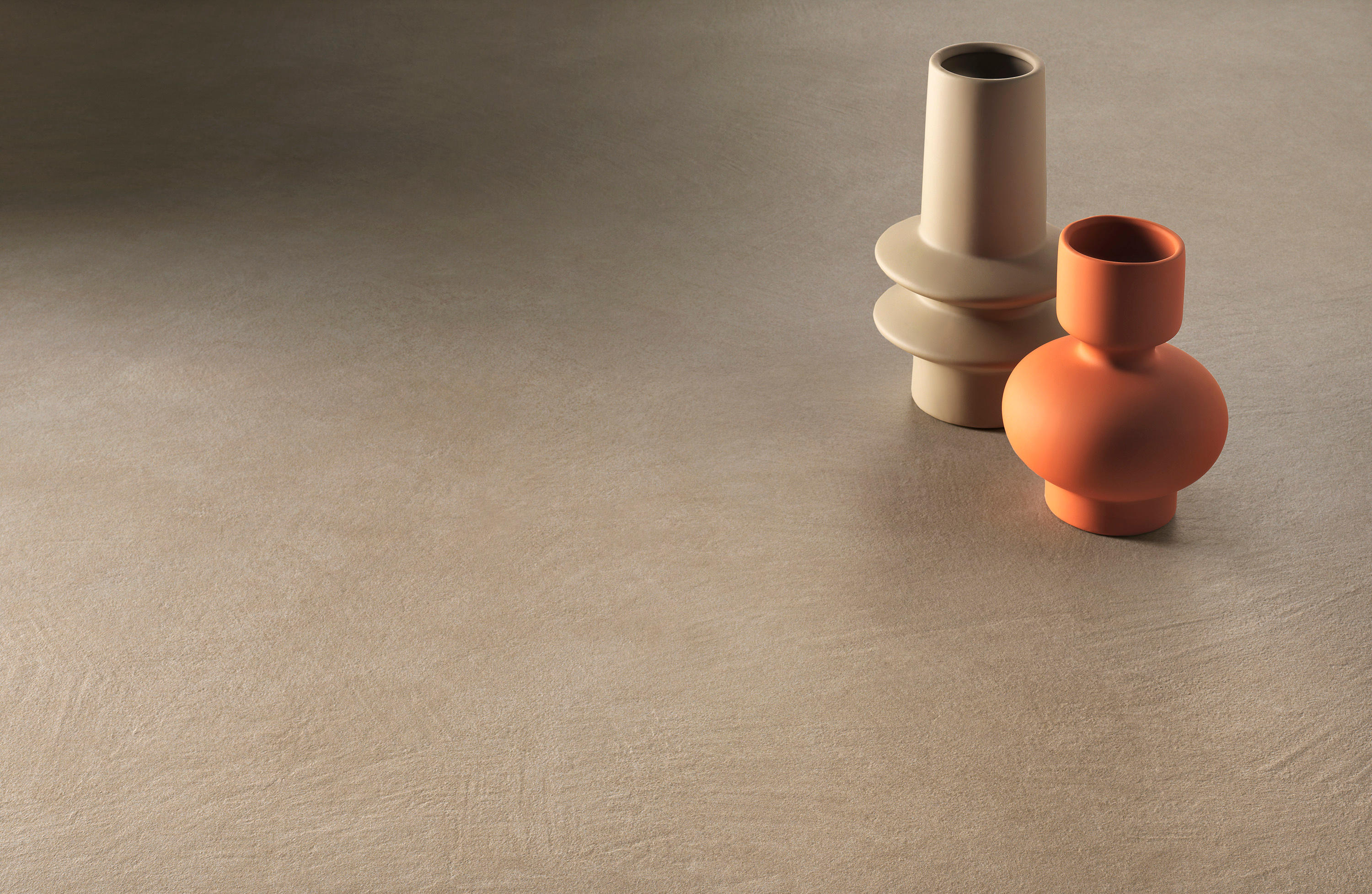
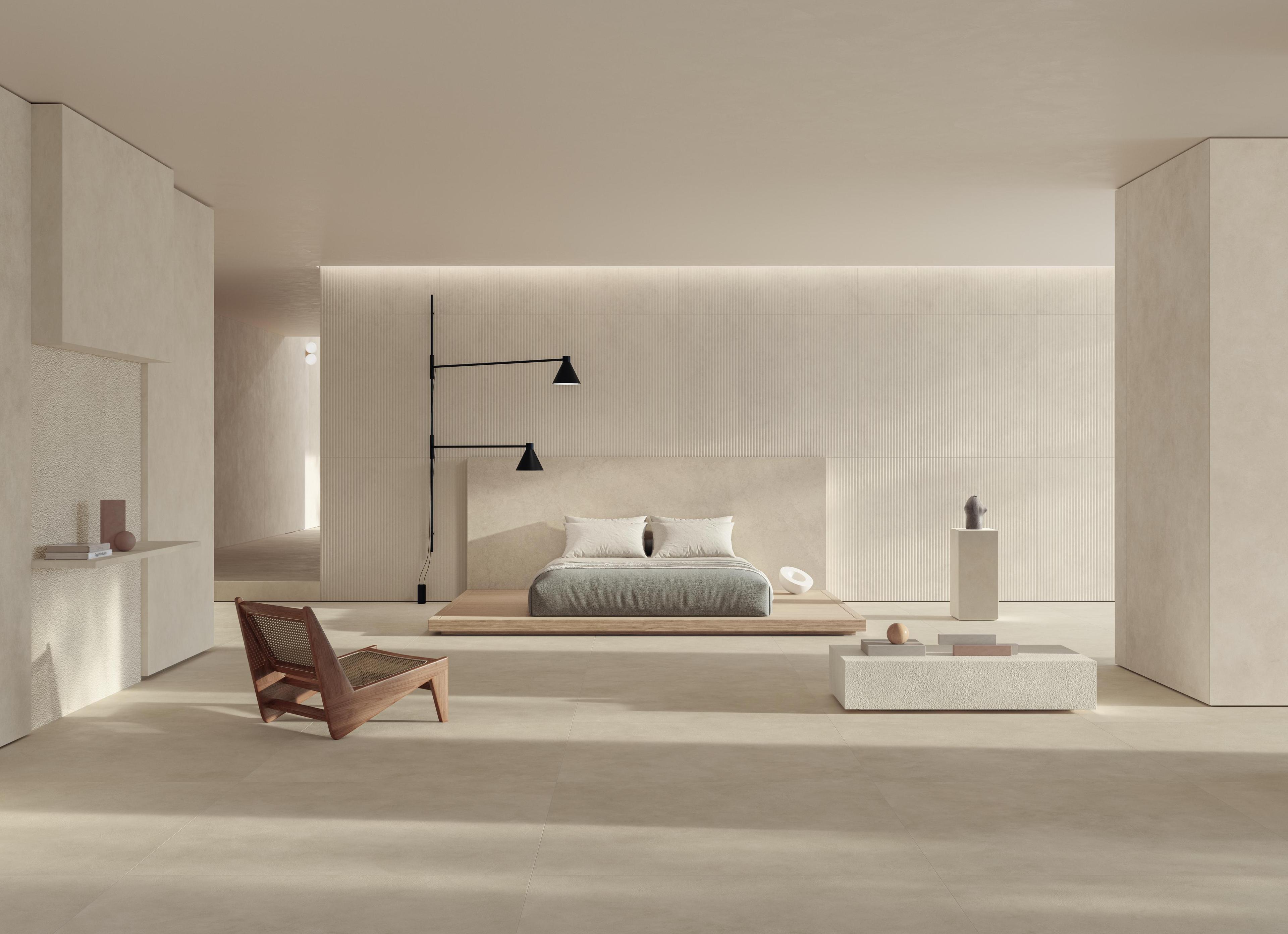
Compared to concrete, porcelain tile maintains a contemporary, minimal look but with greater resistance to stains, wear, and weathering; it is therefore a reliable, stable material that is easier to manage throughout the lifecycle of a project.


Key technical characteristics to consider
To understand how to choose outdoor porcelain tiles, it is necessary to consider intended use, safety, thickness, resistance to weather conditions, maintenance, and installation system. Each context—private terrace, pool edge, rooftop, public space, or hospitality area—requires a different balance between performance and aesthetic value.
The role of thickness: why 20 mm is the standard for outdoor use
Among the technical characteristics of outdoor porcelain tiles, 20 mm thickness is one of the key criteria. Atlas Concorde Outdoor Sensitech 20 mm surfaces are designed for contexts where the material must ensure greater robustness, stability, slip resistance, and mechanical strength.
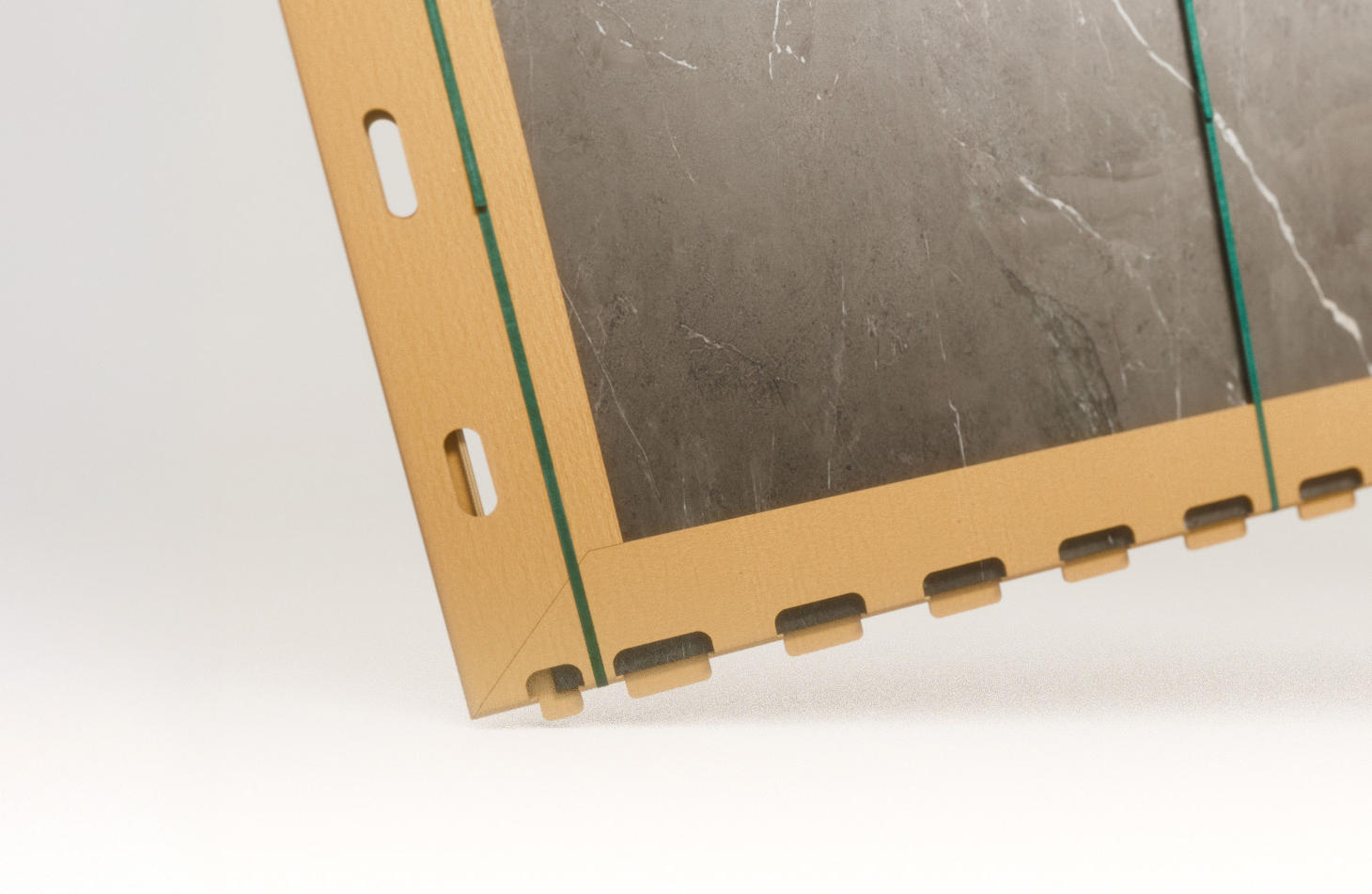
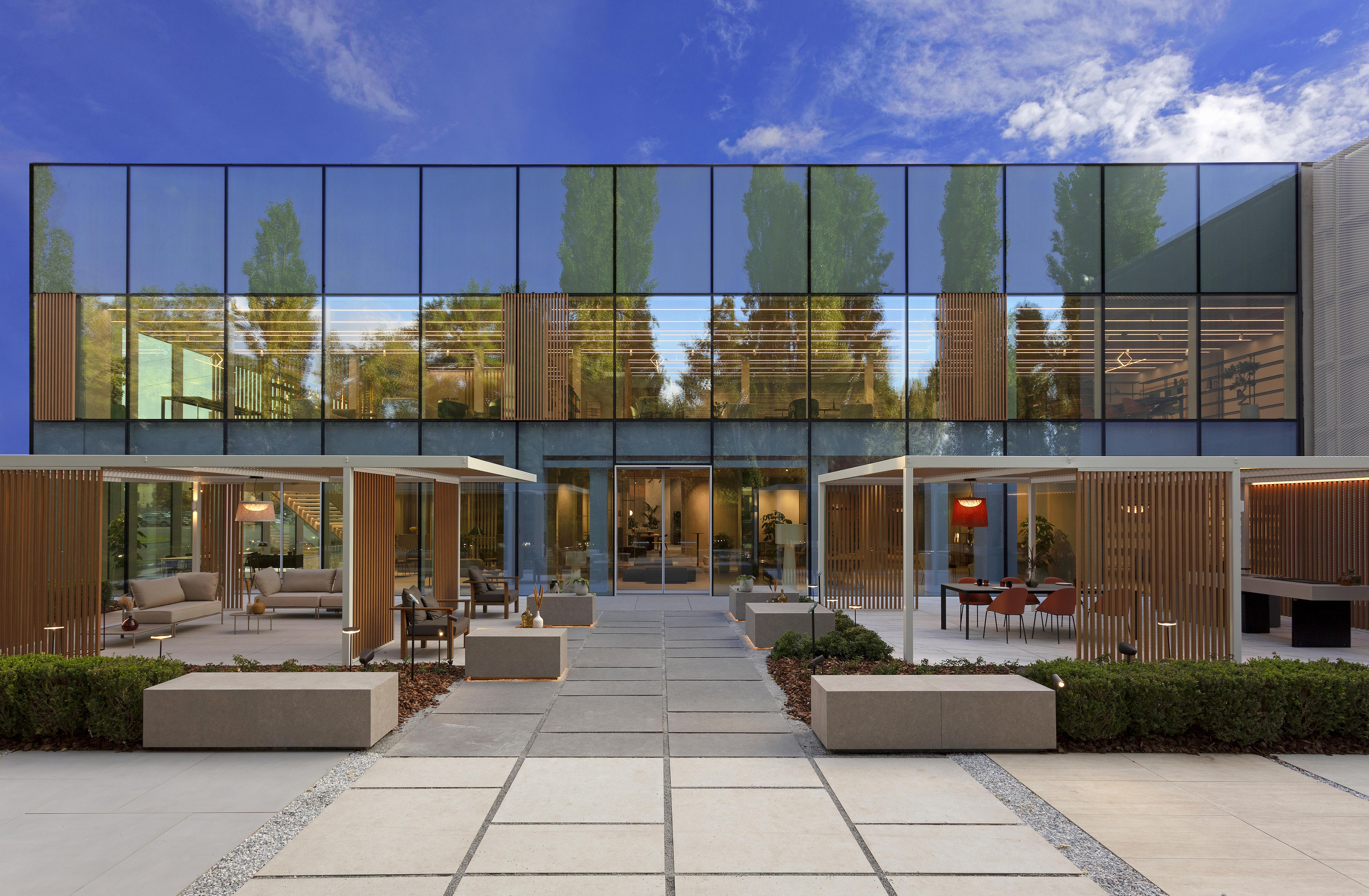
The 20 mm format is suitable for terraces, gardens, courtyards, walkways, pool areas, public spaces, and hospitality settings. It can be installed using different systems: bonded installation on screed, raised installation on supports, or dry laying on gravel and grass.
Thickness becomes a design tool to extend ceramic surfaces outdoors, offering versatility and greater operational reliability.
Slip resistance and safety
Safety is a key factor in choosing non-slip outdoor porcelain tiles, especially in spaces exposed to rain, humidity, water, or salt exposure. Atlas Concorde outdoor surfaces achieve specific performance levels, such as the R11 C rating in the Grip Sensitech 9 mm and Outdoor Sensitech 20 mm versions.
The R classification refers to slip resistance with footwear, while the barefoot A+B+C classification is relevant for pool edges, spa areas, and wellness spaces. For this reason, in wet or high-traffic environments, it is important to select non-slip outdoor porcelain tiles with performance levels appropriate to the intended use.
Sensitech technology makes it possible to combine high slip-resistance performance with a surface that is pleasant to the touch and easier to clean compared to traditional surfaces.
Resistance to weather conditions
Weather-resistant outdoor flooring must maintain stability and integrity even in the presence of frost, thaw, UV exposure, humidity, and thermal fluctuations. Atlas Concorde outdoors porcelain tiles have an extremely low water absorption rate, below 0.1%, which makes the outdoor tiles frost-resistant.
Low porosity limits the penetration of moisture into the material body, reducing the risk of cracks, detachment, or alterations related to freeze-thaw cycles. Even in humid environments such as pool edges, spas, and outdoor lounges, the tile maintains its structural and aesthetic properties.
In indoor-outdoor projects, color stability is equally important: surfaces must maintain the same tones between interior and exterior areas, even when exposed to sunlight.
Long-term durability
Durability refers to the ability of a surface to withstand wear, foot traffic, loads, weather exposure, and frequent cleaning. Many Atlas Concorde 20 mm surfaces are suitable for high-traffic use, making them appropriate for highly demanding contexts such as public spaces, hospitality facilities, sports centers, walkways, and commercial areas.
In residential projects, durability helps preserve the aesthetic identity of outdoor spaces. In hospitality or real estate contexts, it contributes to maintaining the perceived value of the asset and reducing the need for corrective interventions.
Where specific loads or vehicle traffic are expected, the assessment must always consider material, substructure, format, thickness, installation method, and usage conditions.
Maintenance and long-term management
Outdoors porcelain tiles require minimal maintenance. Unlike many natural materials, it does not require oils, waxes, sealants, or periodic protective treatments.
After proper post-installation cleaning, routine maintenance can be carried out with water and neutral detergents. For large surfaces, scrubber-dryers or single-disc machines with soft brushes can be used.
In outdoor spaces, water management remains essential: slopes, joints, and drainage points must be properly designed. This helps reduce water stagnation, facilitate cleaning, and preserve the functionality of the flooring over time.



Indoor-outdoor continuity: design value
Indoor-outdoor continuity is one of the central themes of contemporary architecture. Terraces, loggias, pools, and gardens are no longer separate spaces, but natural extensions of living.
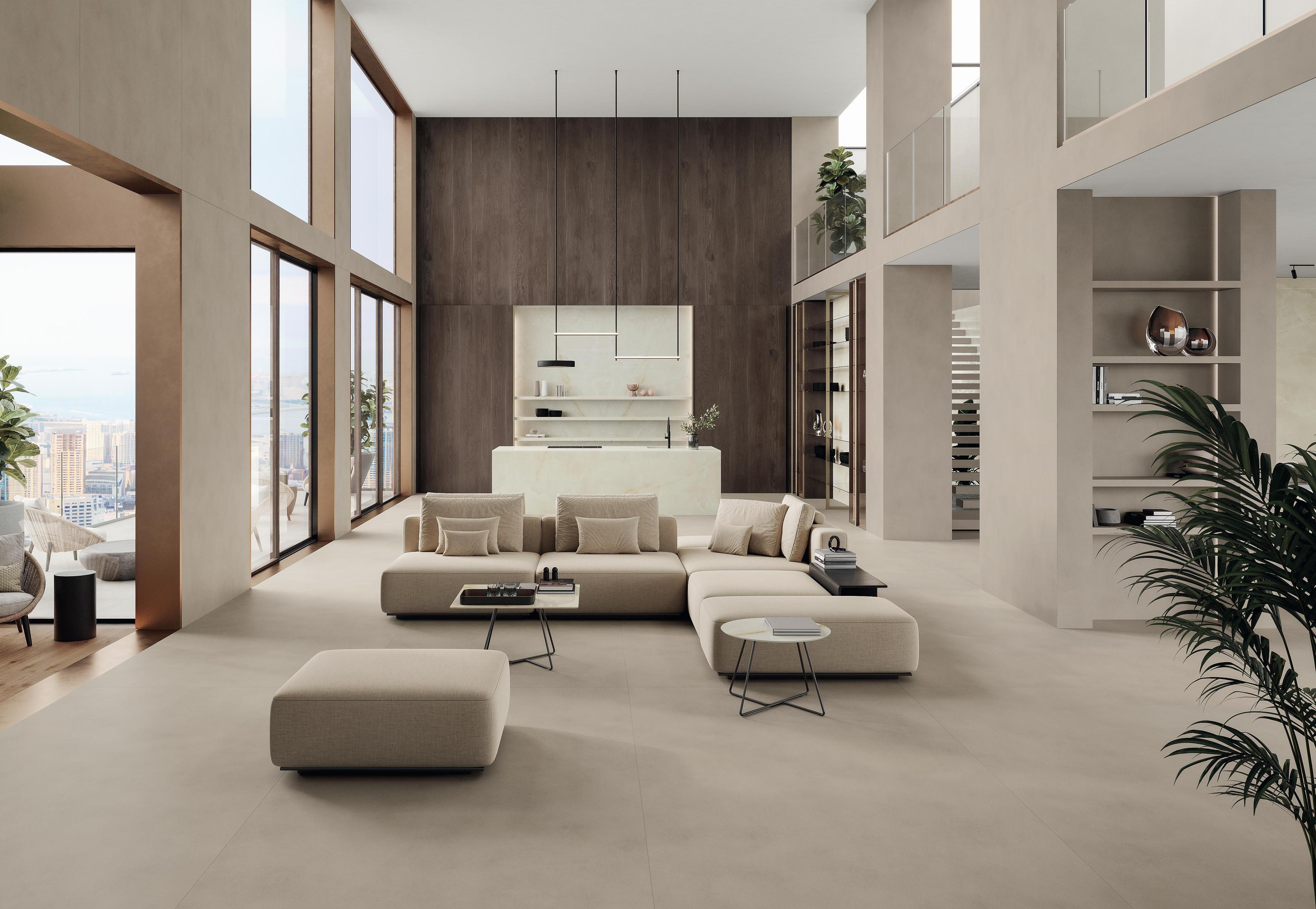
Porcelain tile makes it possible to design this continuity through coordinated collections, compatible formats, and different finishes for indoor and outdoor use, maintaining visual consistency while adapting performance to the intended function.
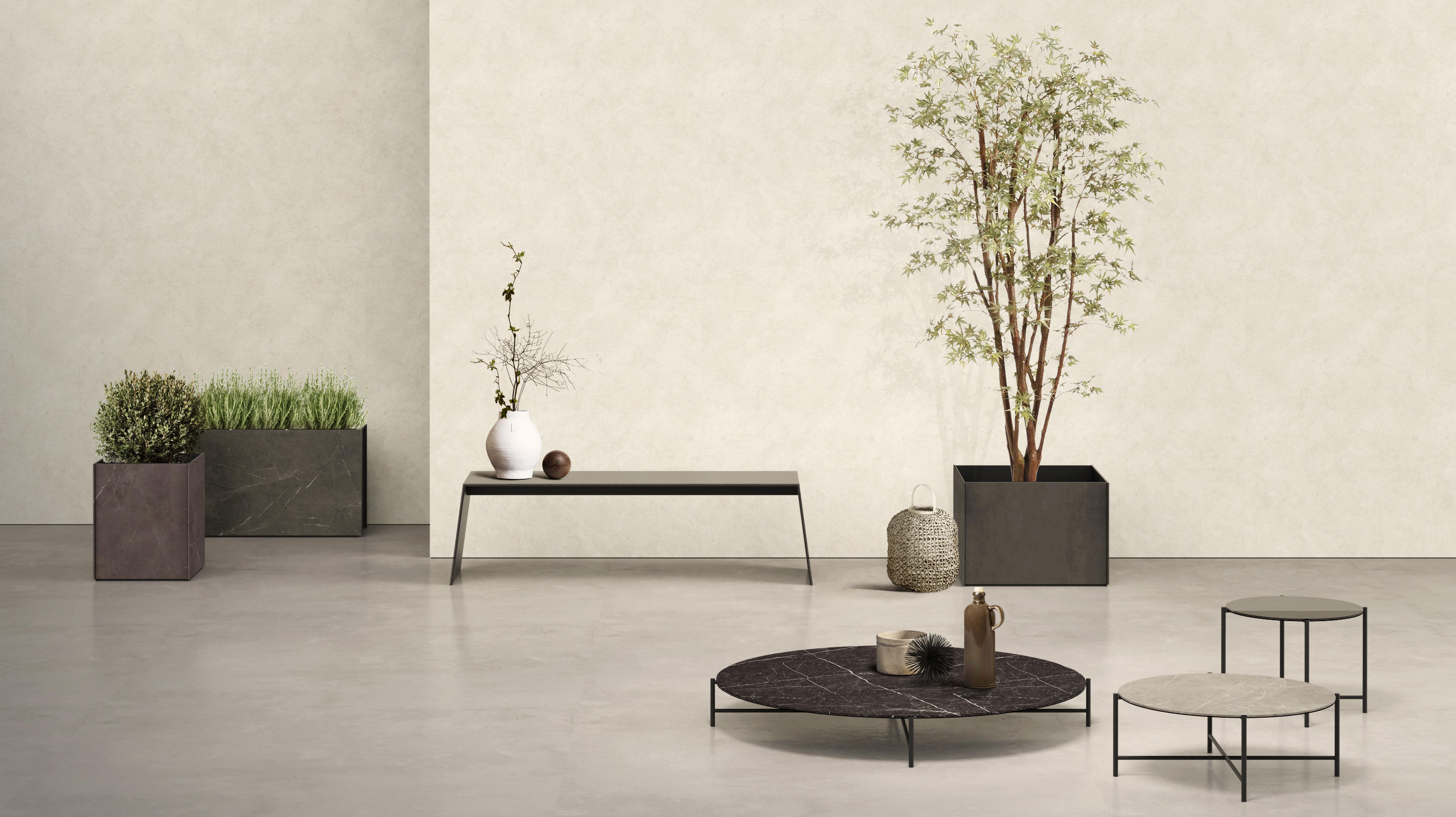
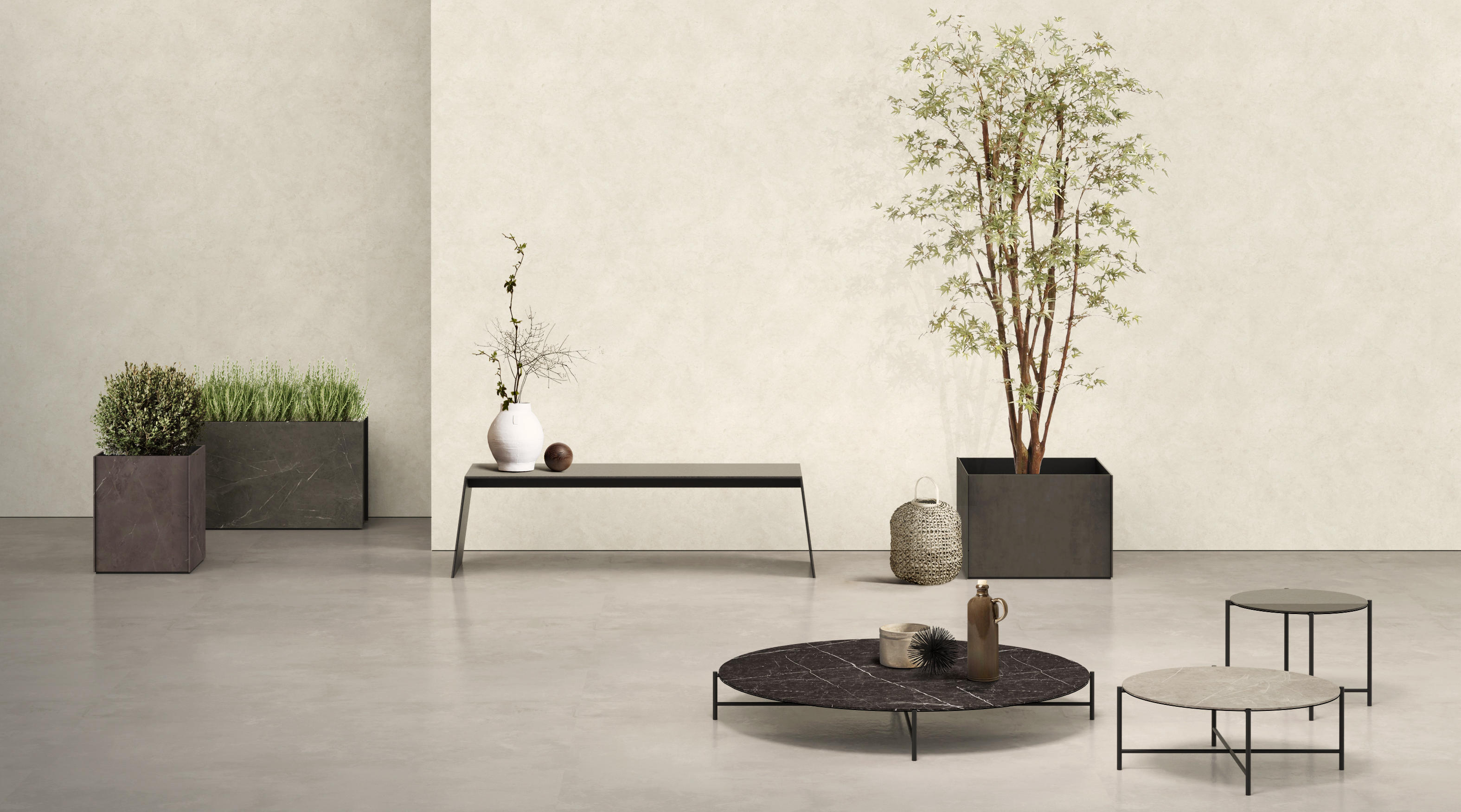
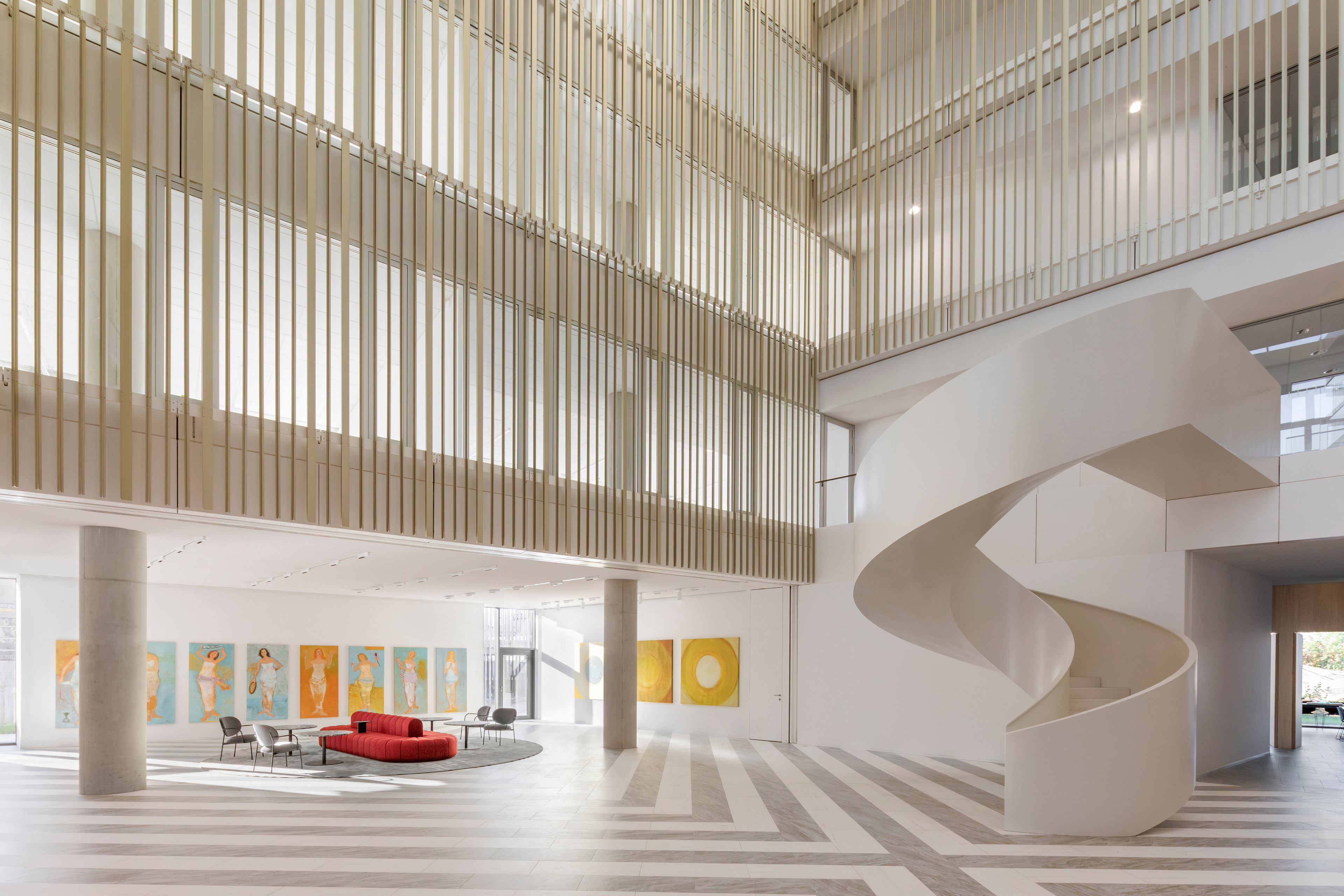
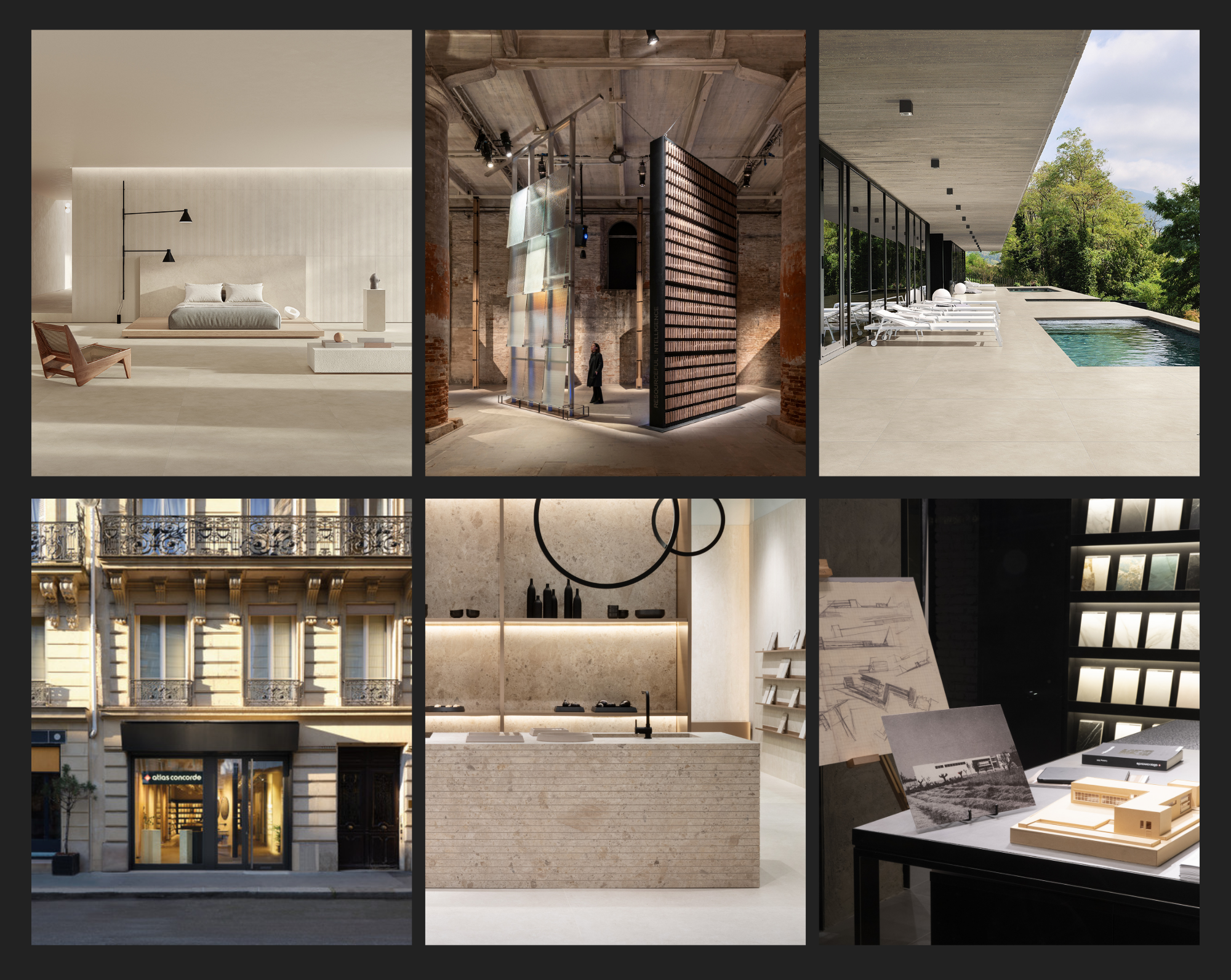
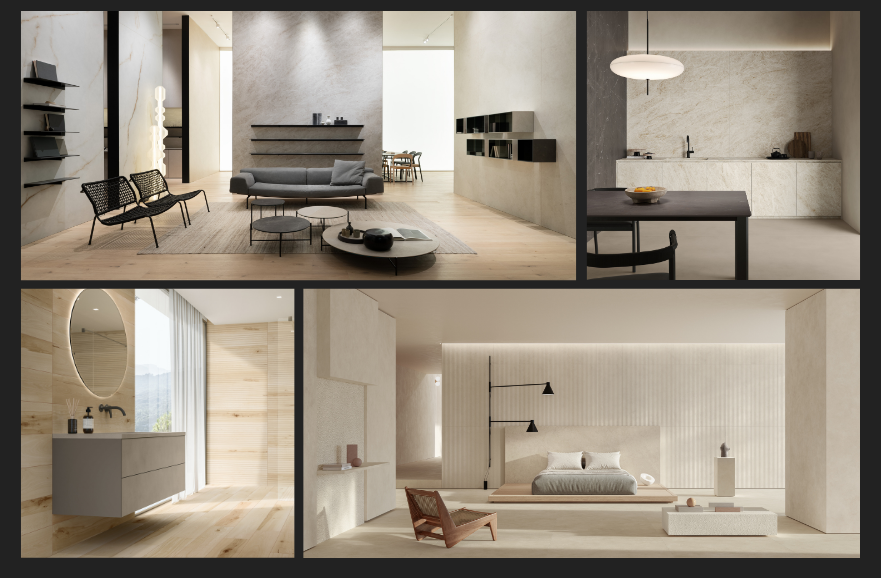
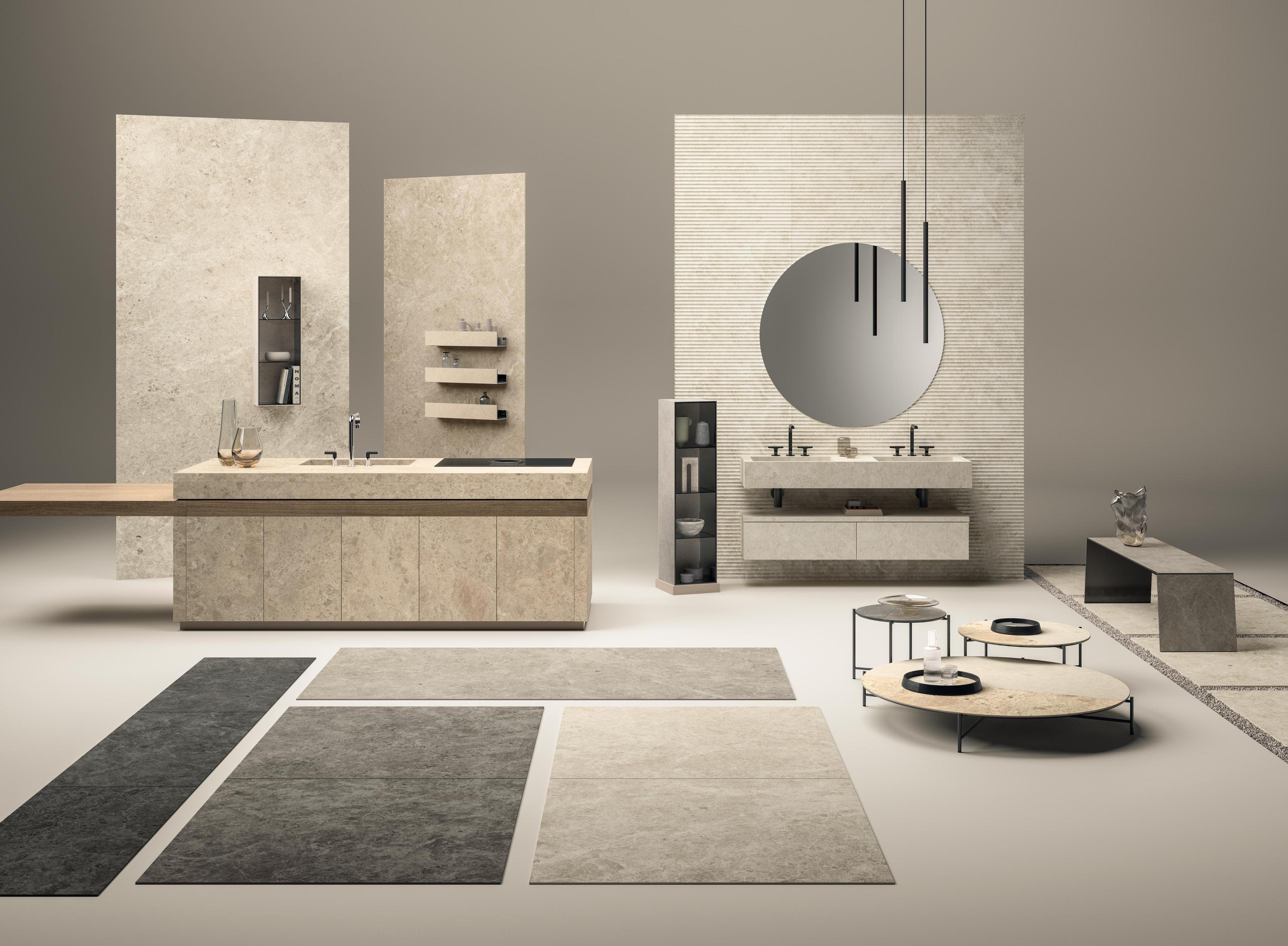
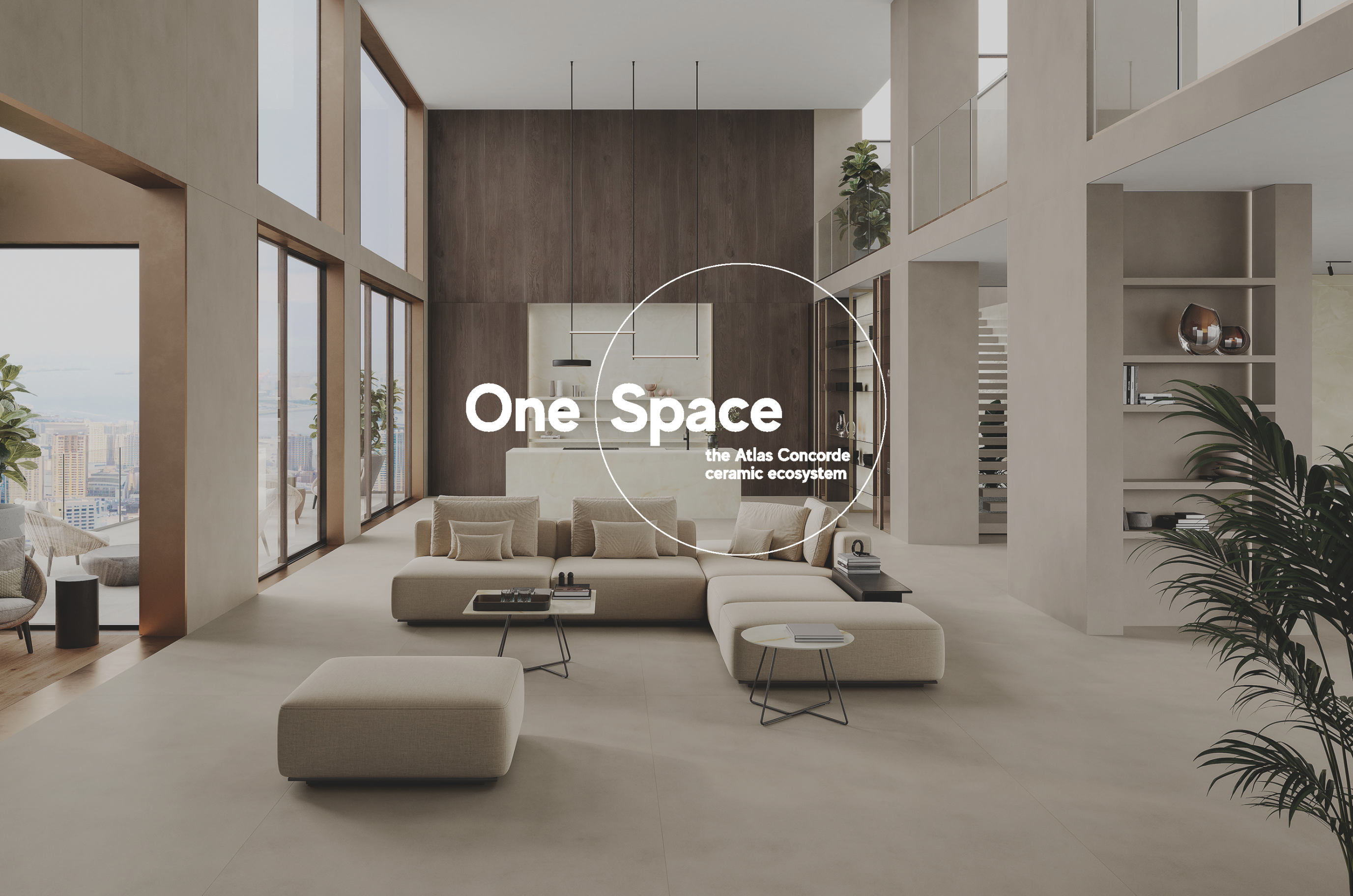
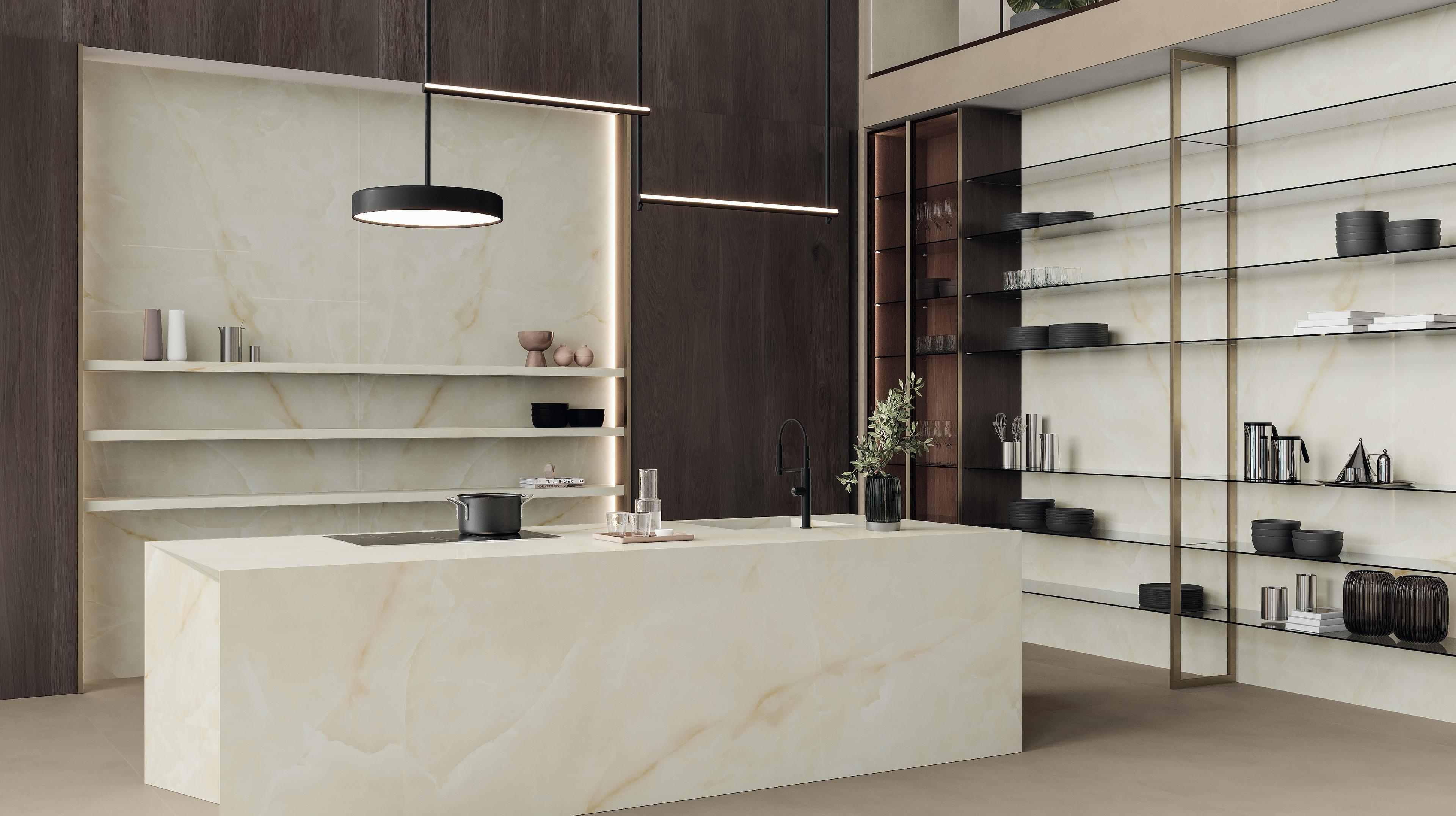
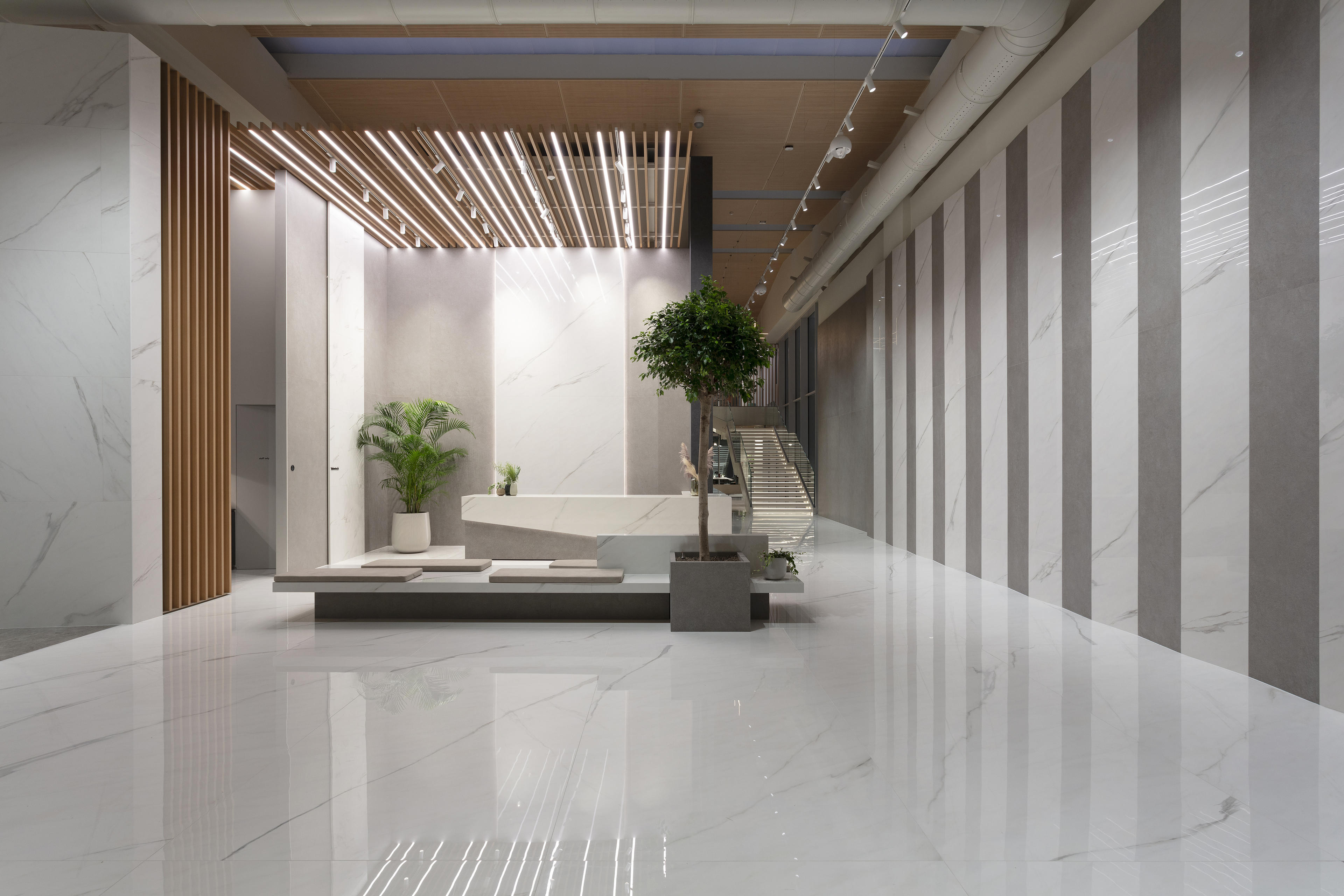
Within this approach is ONE SPACE, Atlas Concorde’s ceramic ecosystem that integrates ceramic floor and wall tiles, along furniture and decorative objects into a unified design language. This makes it possible to create fluid environments where living rooms, terraces, pools, or outdoor lounges share the same material language. Continuity is not only aesthetic: it expands the perception of space, enhances the quality of the project, and improves the user experience.
The Atlas Concorde Outdoor range includes stone, concrete, wood, and marble-effect surfaces, with Grip Sensitech 9 mm and Outdoor Sensitech 20 mm finishes, designed to coordinate floors, wall coverings, stairs, pool edges, façades, and outdoor areas.
Contexts where Atlas has made a difference
Completed projects show how porcelain tiles can meet different needs: safety, durability, moisture management, aesthetic continuity, high traffic, and perceived value.
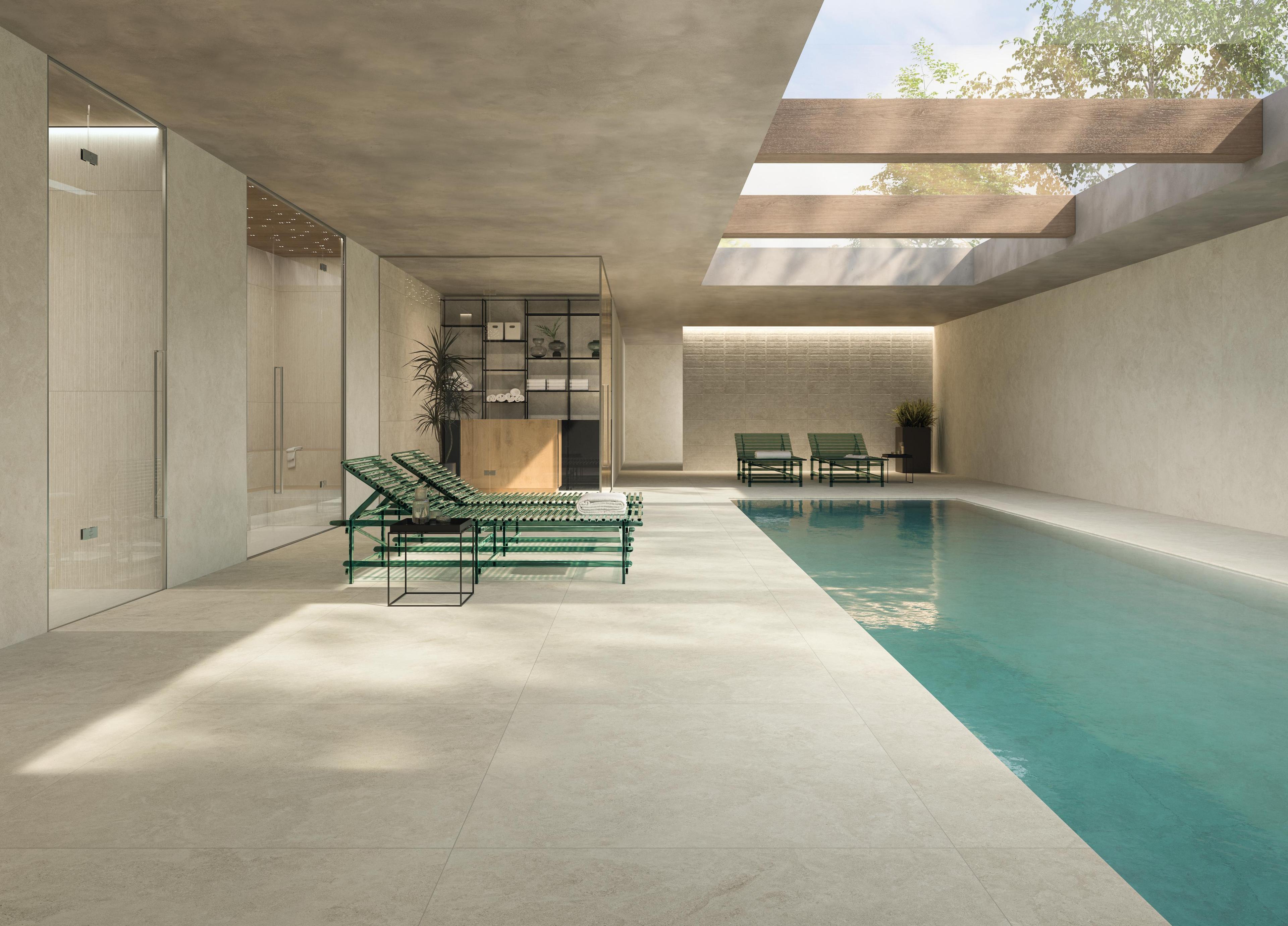
Pools and wet areas
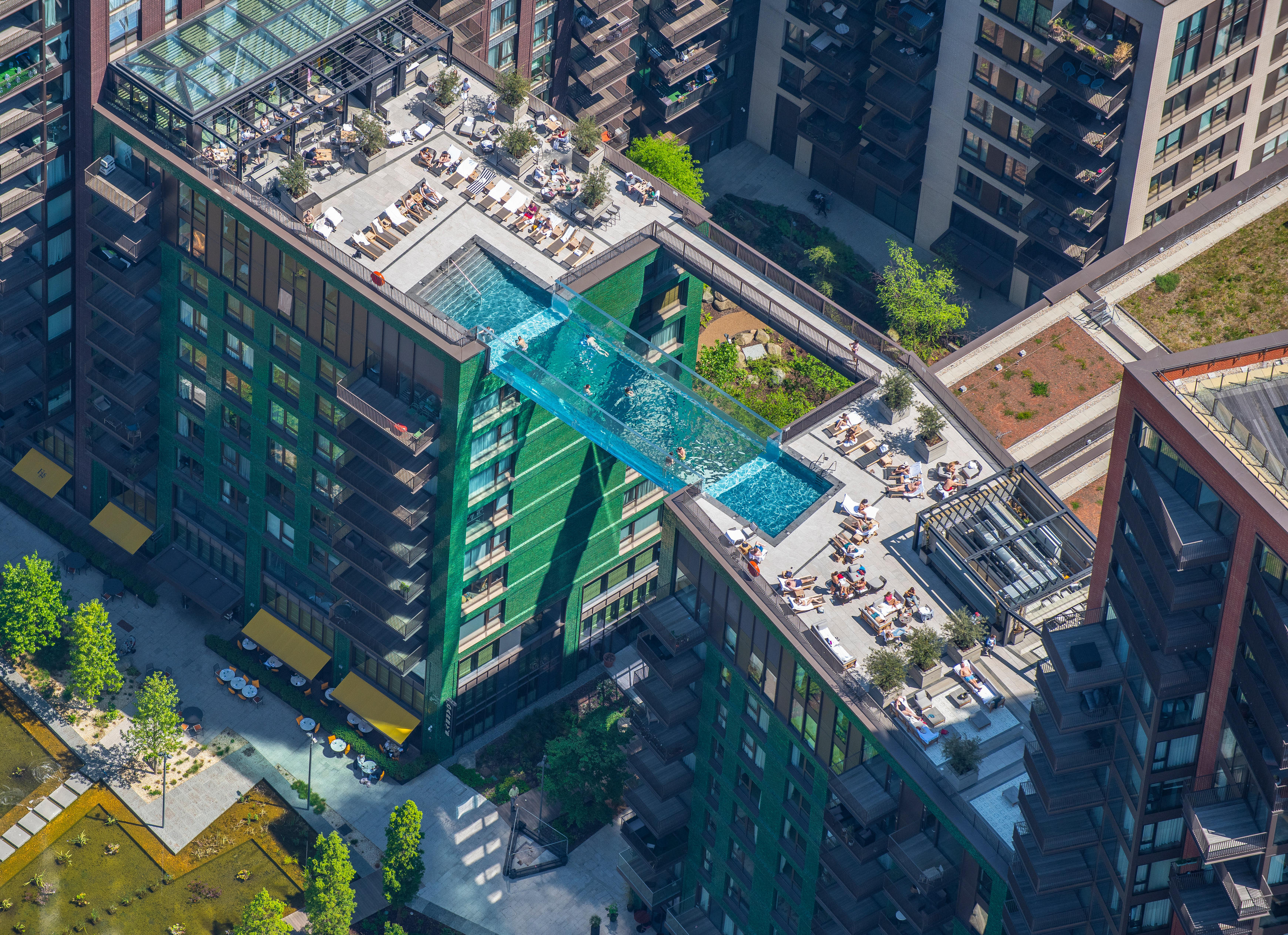
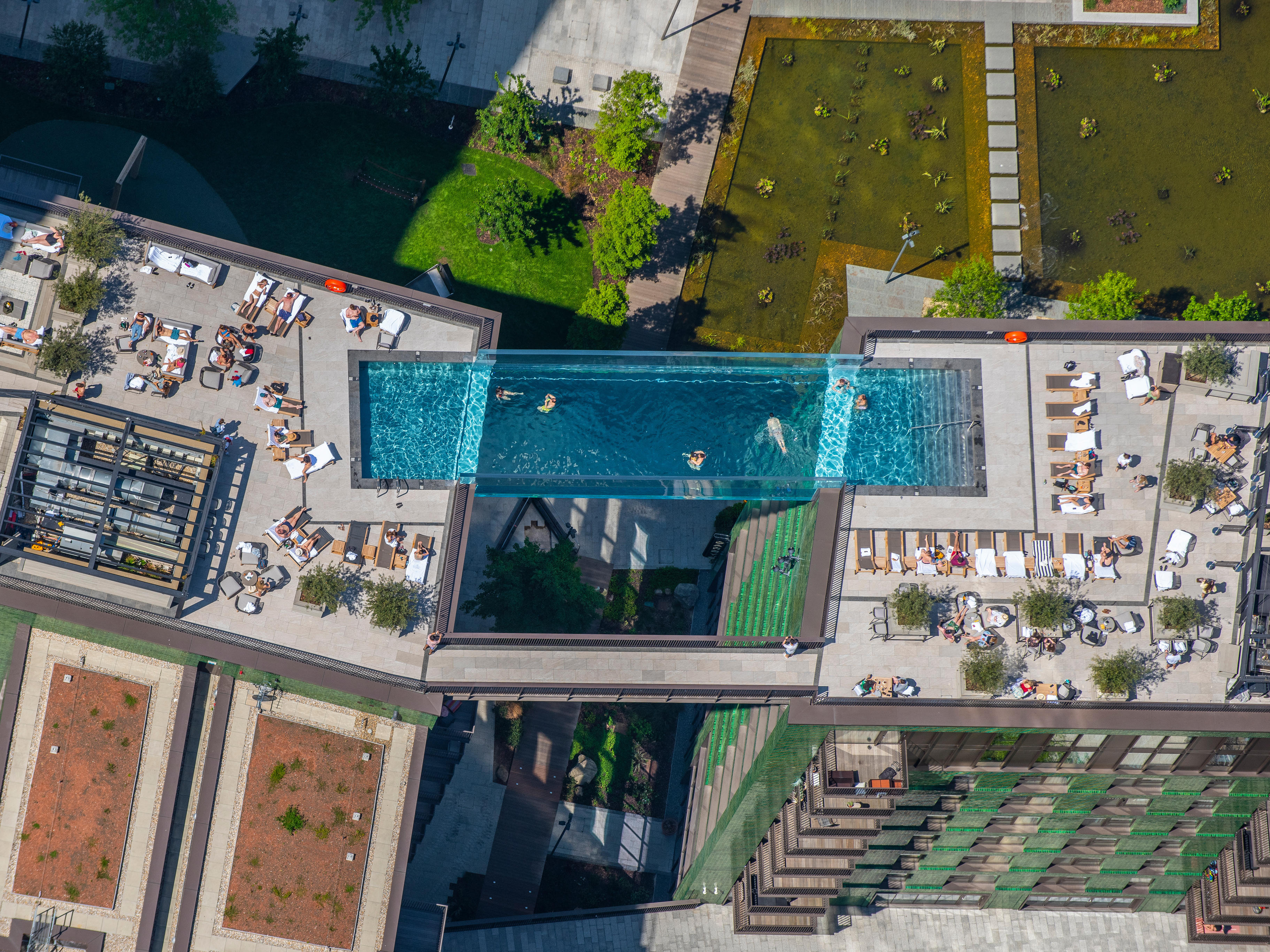
The Sky Pool in London is a project that tested the versatility of natural stone look tiles. The suspended pool deck at Embassy Gardens required surfaces capable of withstanding complex conditions: heavy foot traffic, exposure to humidity and weather agents, without compromising aesthetics and safety. The choice of Atlas Concorde made it possible to combine slip resistance, ease of maintenance, and raised installation, ensuring an elegant and functional terrace where the ceramic surfaces integrate seamlessly with the modern architecture of the setting.
Public spaces and high-traffic areas
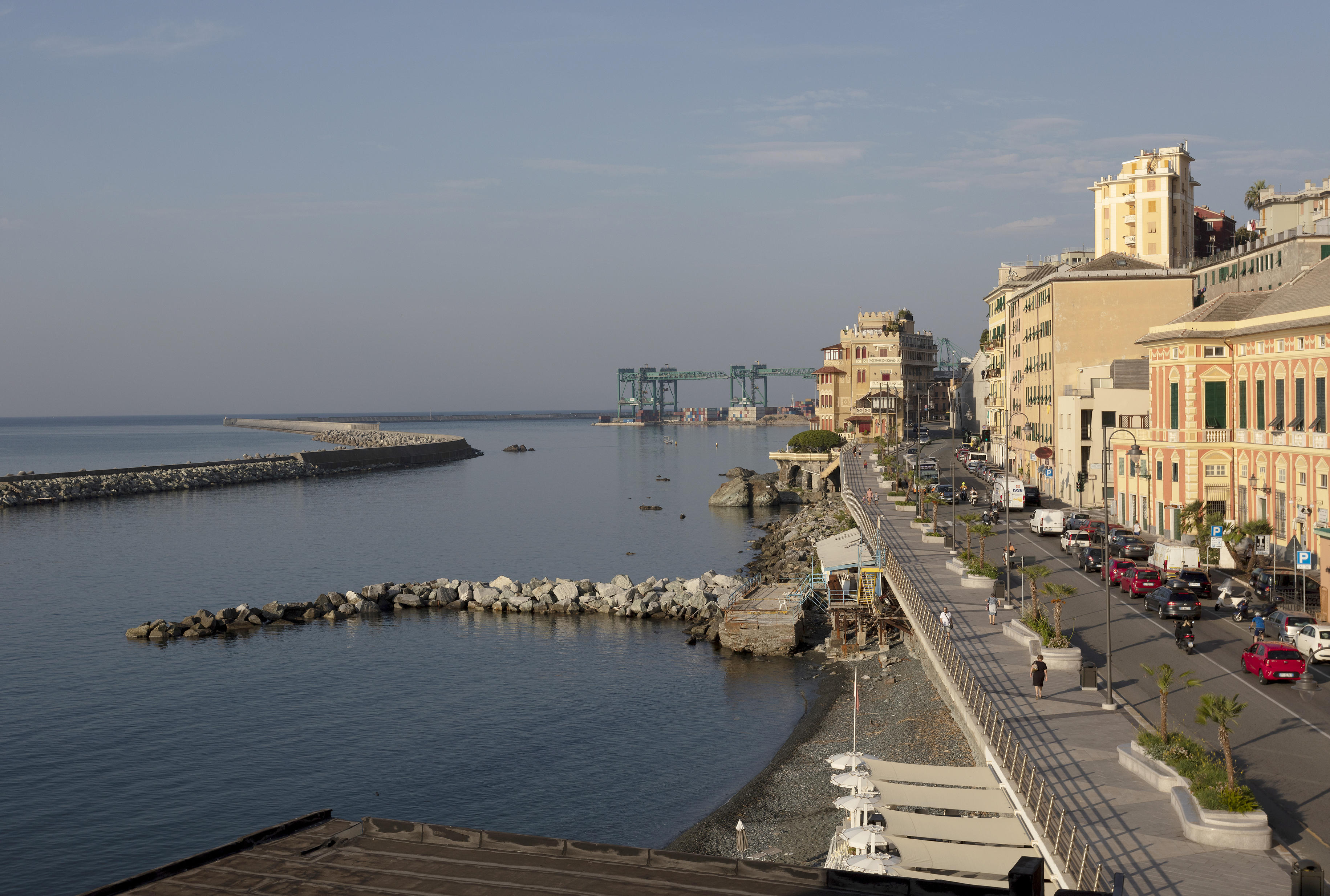
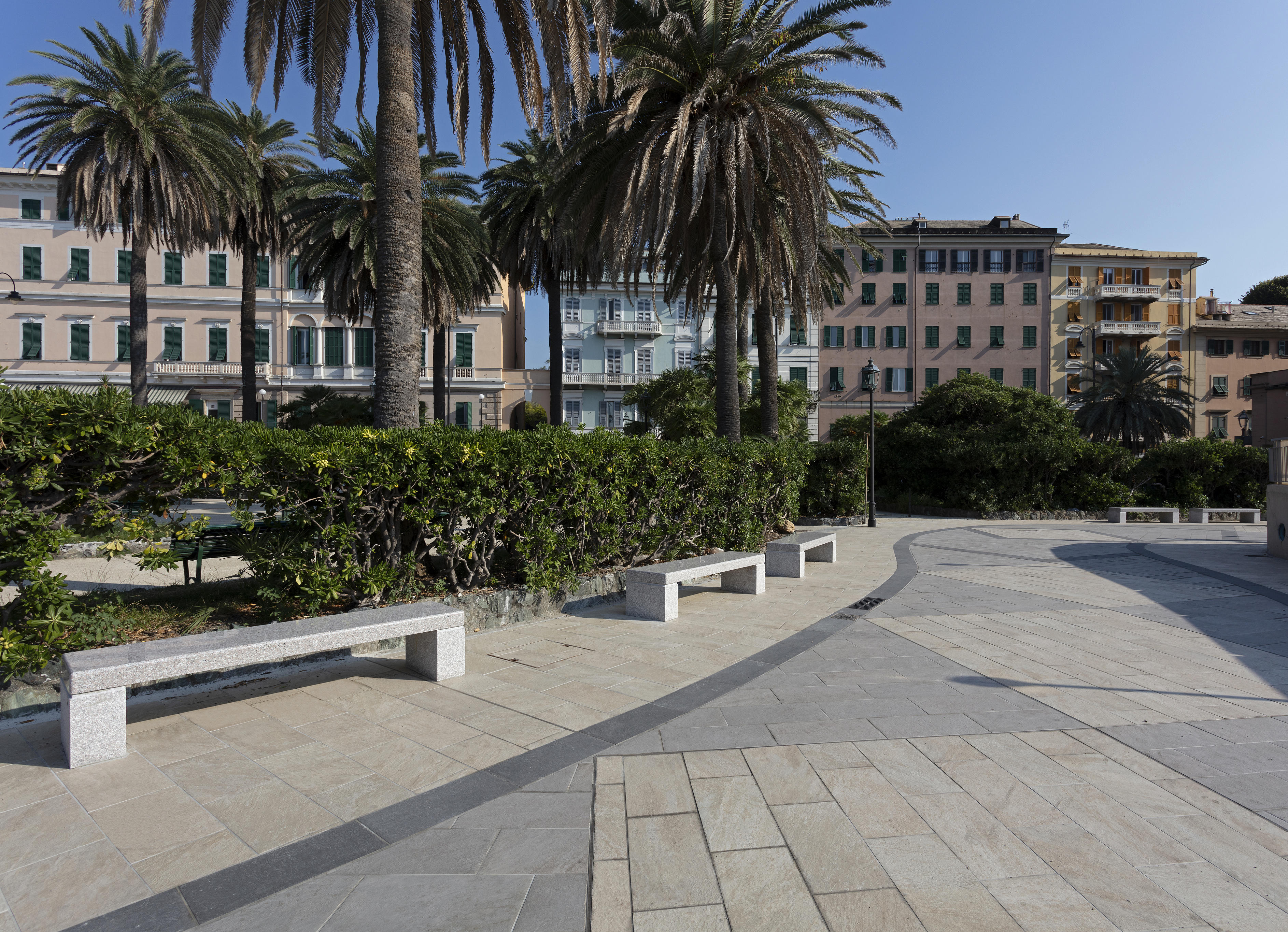
The Promenade of Pegli, overlooking the sea, shows how stone-effect porcelain tiles can enhance public spaces by combining durability and safety with seamless integration into the surrounding landscape. Here, the flooring is not only a technical element: it becomes integral to the experience of the space, ensuring visual continuity and comfort for pedestrians even under changing weather conditions.
Hospitality and outdoor lounge
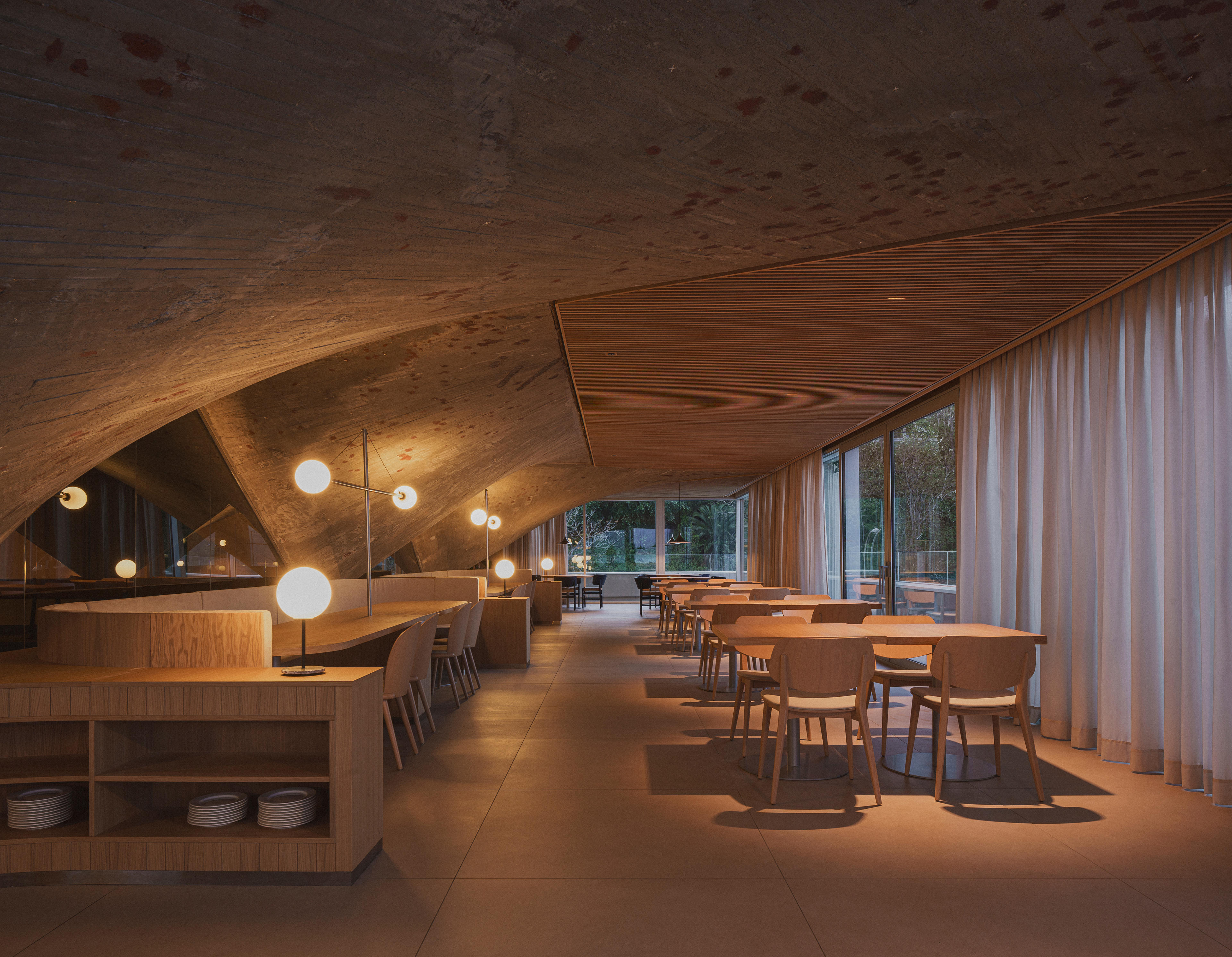
At the Hilton Budapest, stone-effect porcelain tile takes center stage in a sky bar overlooking the Danube. In this high-traffic setting, aesthetics and safety were key priorities: the selected surfaces provide resistance to humidity and long-term durability, without compromising the elegance and visual continuity of the outdoor spaces.


Residential outdoor
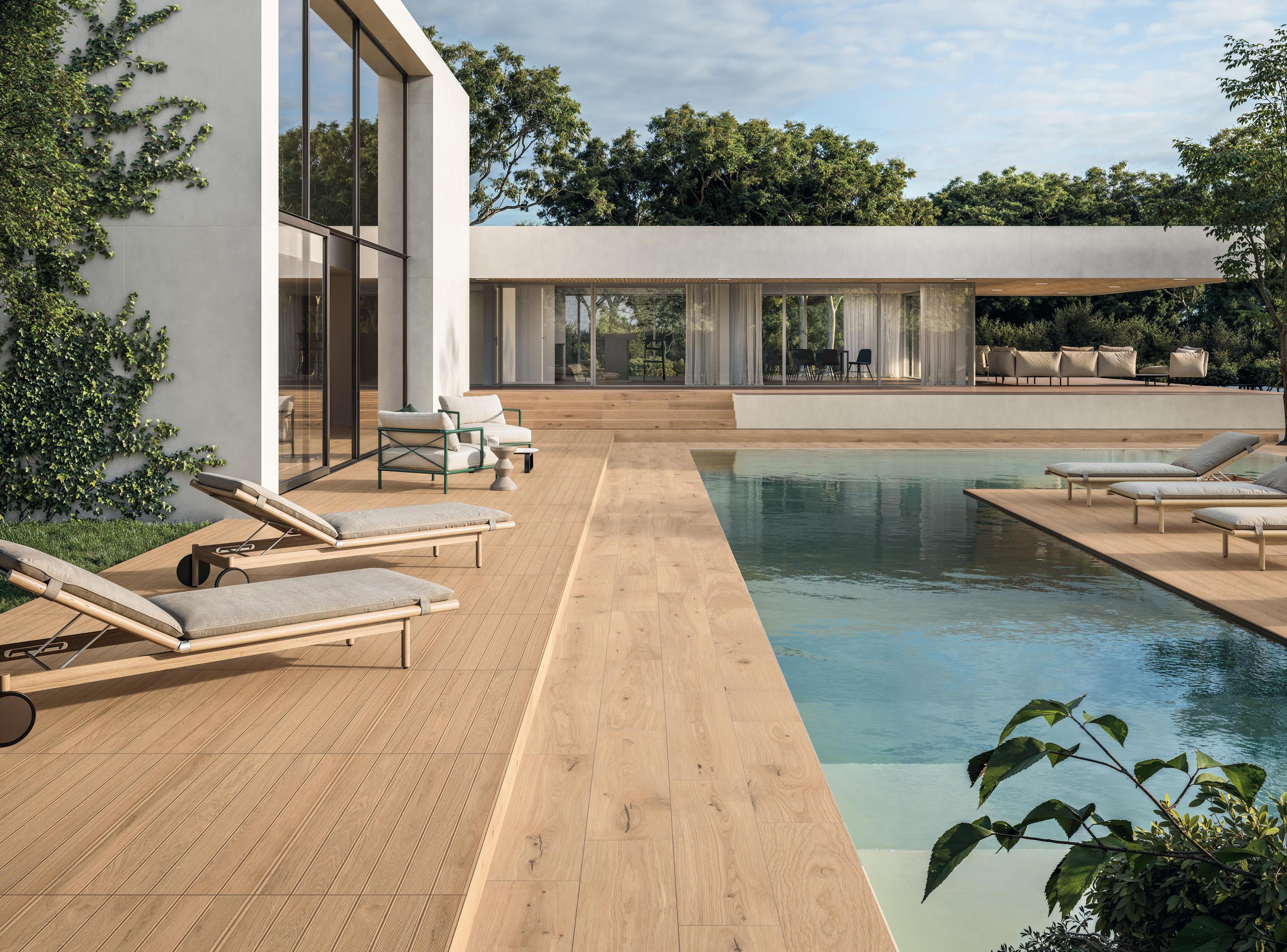
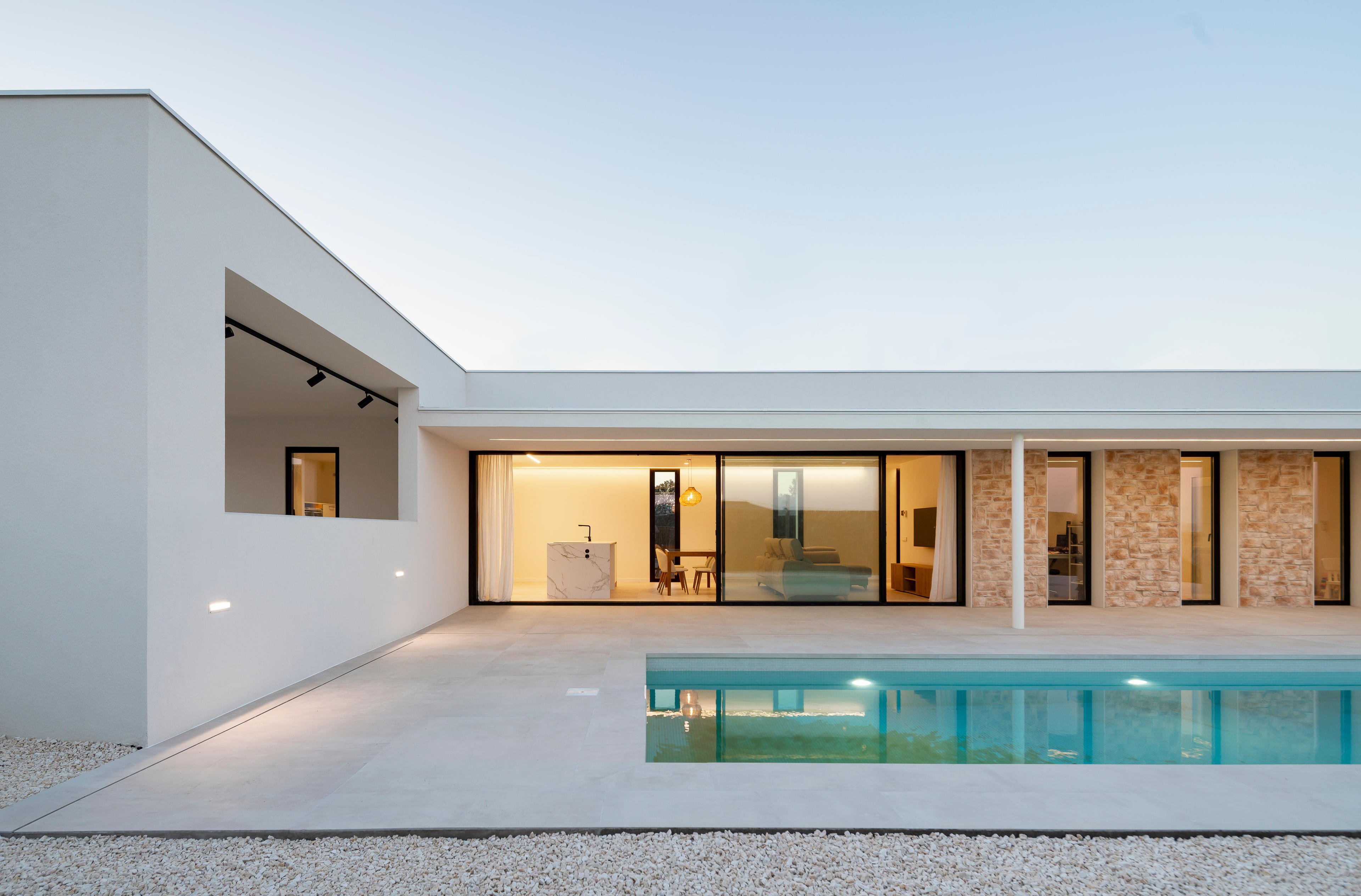
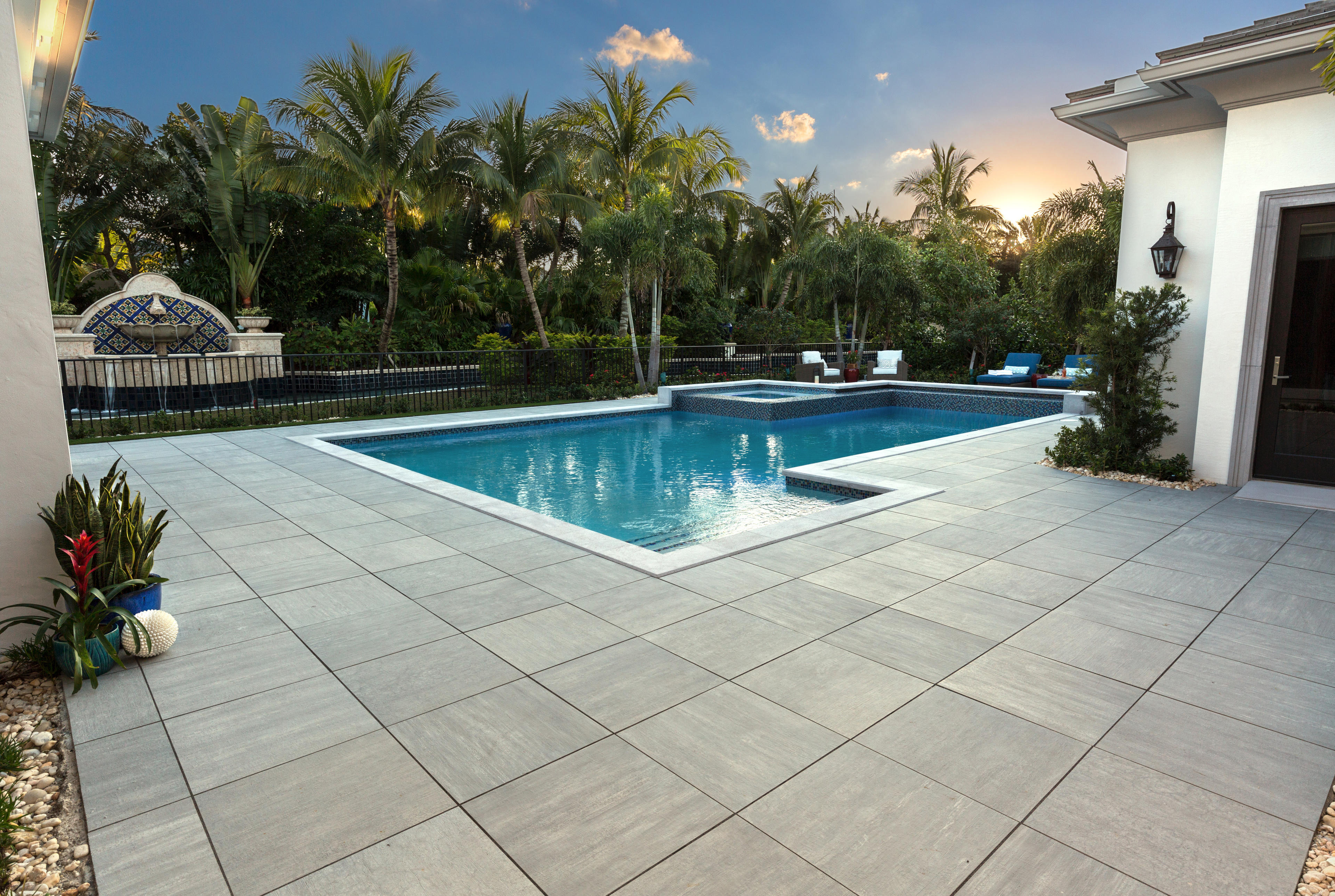
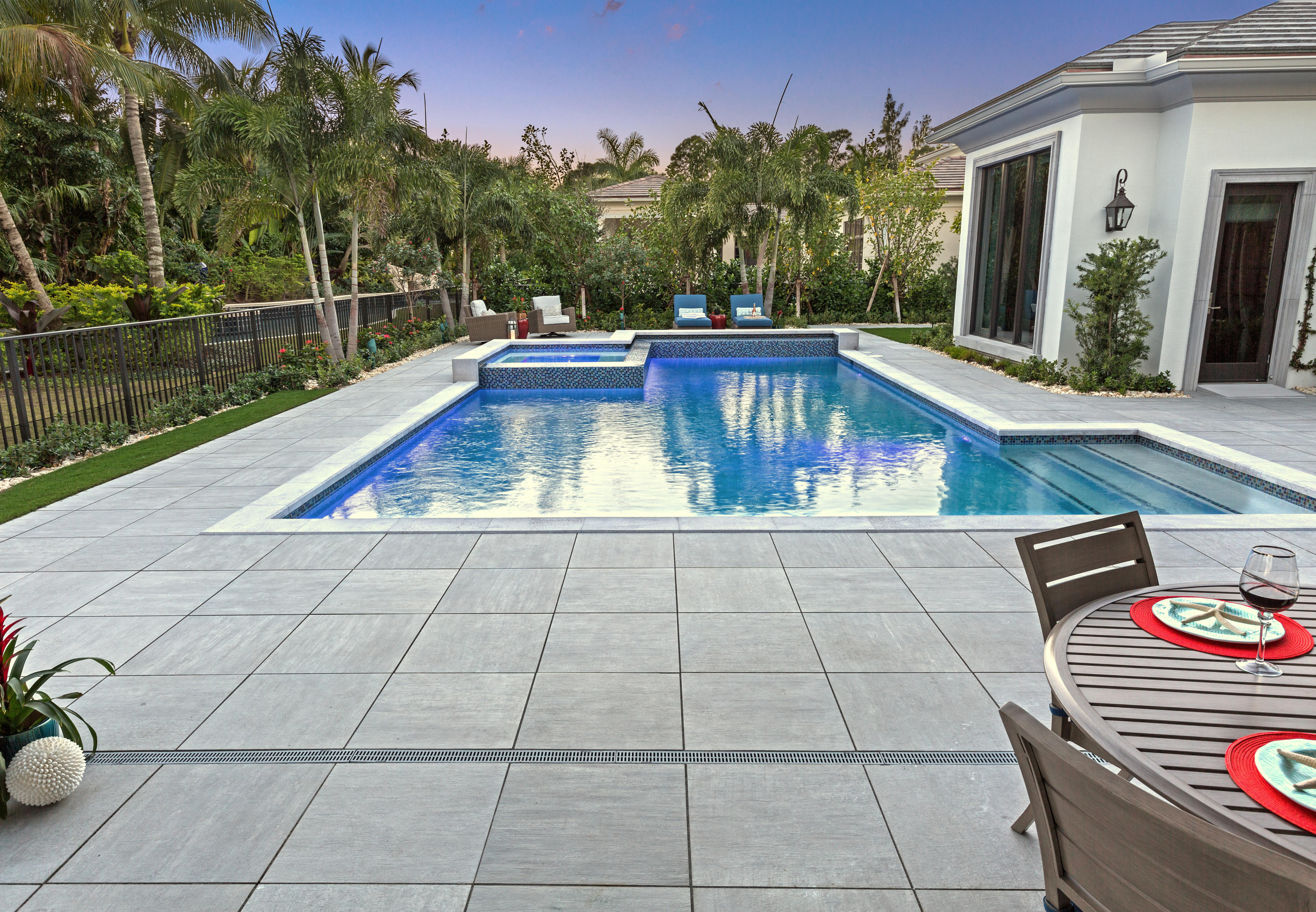
Finally, in the Private Garden project in Jacksonville, Atlas Concorde 2 cm porcelain tiles in 60x60 cm format transformed a large outdoor space with a pool into a safe, elegant, and practical environment. Thanks to its durability, slip resistance, and low maintenance requirements, the flooring supports every step taken by guests, blending harmoniously with the garden and enhancing visual continuity between the poolside and relaxation areas.
Outdoor porcelain tiles: a checklist
To select the most suitable outdoor porcelain tiles, it is useful to check a few essential criteria.
1. Intended use
Assess whether the surface will be used for:
terraces
gardens
pool floors
rooftops
public spaces
hospitality areas
high-traffic walkways
2. Safety
Check:
anti slip floor finish
appropriate classification
performance in wet conditions
suitability for public areas, spas, pools, and entrances
3. Thickness
Consider 20 mm thickness for:
greater robustness
stability
compatibility with multiple installation systems
use in high-stress outdoor environments
4. Resistance to weather conditions
Check:
frost resistance
low water absorption
stability under thermal fluctuations
moisture resistance
color stability
5. Aesthetic continuity
Evaluate:
coordinated indoor-outdoor collections
color consistency
compatible formats and finishes
ability to coordinate floors, wall coverings, stairs, and pool edges
6. Installation system
Choose between:
bonded installation
raised installation
dry laying on gravel or grass
The choice must always consider substrate, drainage, loads, and usage conditions.
7. Maintenance
Check that the surface allows:
correct post-installation cleaning
routine cleaning with neutral detergents
no periodic treatments required
effective management of water and dirt
8. Technical support
For complex projects, large supplies, and finish options lists, it is important to have access to:
technical datasheets
certifications
slip-resistance data
installation guidelines
technical support during design and construction phases
To explore the most suitable solutions for an outdoor project, request technical information, or identify the surface most consistent with requirements for installation, safety, and aesthetic continuity, you may contact Atlas Concorde via the contact form.