Product search
Select language
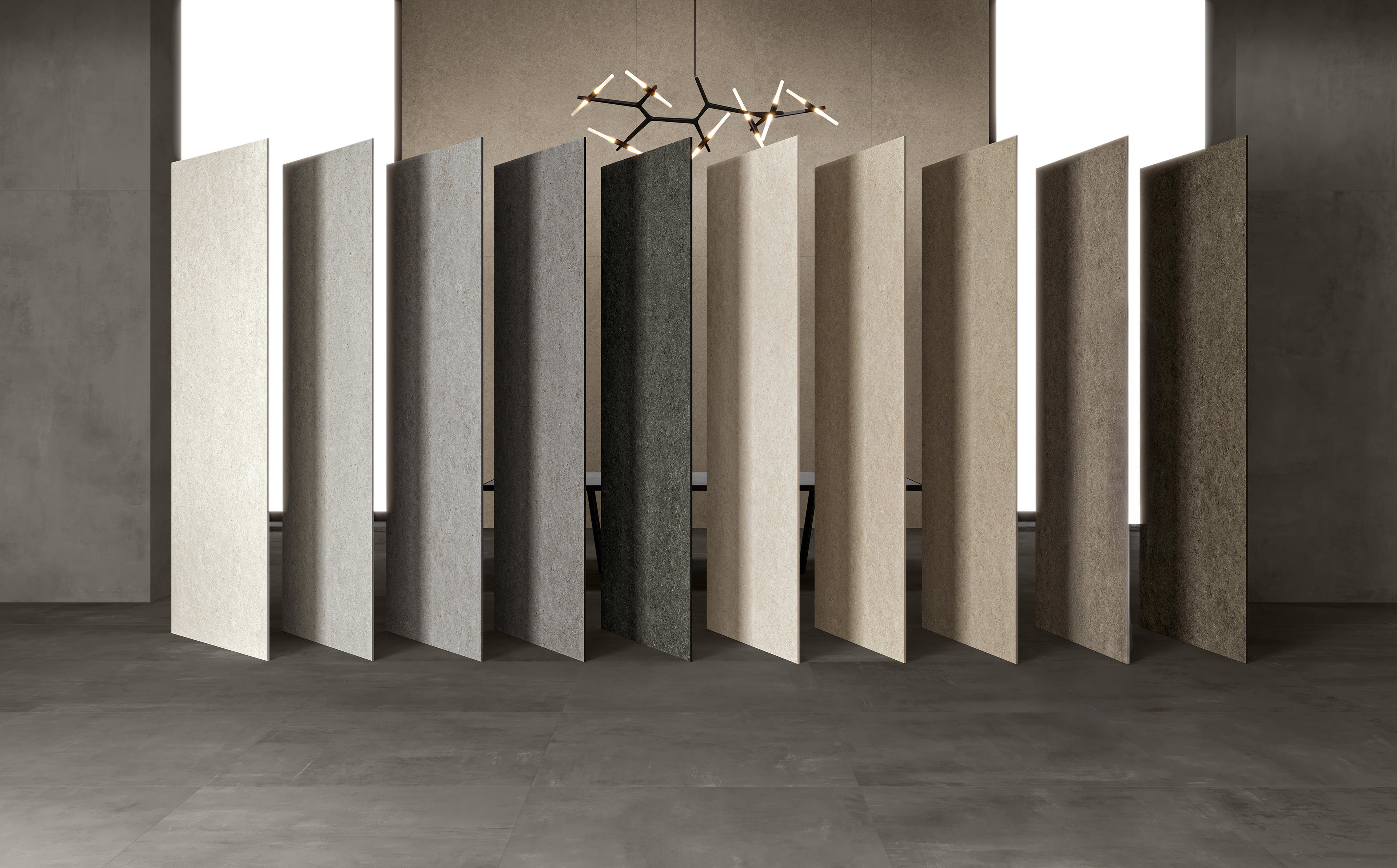
AtlasConcorde_BoostVision_000_00_Grey_Glow_Ash_Corten

Trend

Outdoor driveway paving in porcelain tile: technical requirements

21 October 2026

Designing outdoor driveway paving requires the covering to be considered as part of a system made up of substrate, screed, adhesive, grout joints and movement joints. Vehicle traffic in fact generates distributed loads, concentrated stresses and dynamic actions that cannot be assessed on the basis of tile thickness alone.

Garage accesses, private driveways, communal parking areas, courtyards and shared spaces present different conditions in terms of traffic frequency, vehicle type, gradient and exposure to the weather. The choice of driveway flooring must therefore start from the actual intended use and translate into requirements that can be verified in the specification: mechanical characteristics, slip resistance performance, behavior in frost, installation system and water management.

For general contractors, construction companies and real estate operators, this approach makes it possible to reduce the risk of breakage, detachment and standing water, and also to plan maintenance and property management costs more reliably.

Thickness, loads and performance of drive-over porcelain tile

Thickness is one of the parameters to check, but it does not on its own define the suitability of driveway tiles. It must be related to size, declared mechanical strength, supporting structure, installation method and expected loads.

In residential areas used exclusively by cars, non-slip porcelain paving 8 or 9 mm thick may be considered, provided it is laid on a correctly designed substrate. Solutions with a thickness of 20 mm or more offer higher mechanical performance and are also suitable for industrial or commercial driveway areas such as squares, public parking lots and surfaces subject to heavy vehicle traffic.

When defining the drive-over industrial floor thickness, the operating conditions and the values given in the technical documentation for the specific item must be verified. It is not correct to assume 20 mm automatically as the minimum requirement for any drive-over surface.

The size and geometry of the tile must also be coordinated with the installation system and the expected loads, especially in areas subject to steering, braking or the repeated passage of wheels. For this reason the specification should indicate not only the collection, but also the item, size, finish, thickness and intended use.

For an outdoor application, slip resistance performance must be defined in relation to gradient, the presence of water, soiling, mode of use and applicable requirements. The class required must therefore be verified on the basis of the intended use and the actual conditions of the surface.

In outdoor driveway ramp paving, the gradient and the maneuvering of vehicles make it even more important to verify the slip resistance required by the project and the compatibility of the finish with the operating conditions. The R11 classification therefore does not replace the specific assessment of the ramp and of the applicable standards.

The low water absorption of porcelain tile favors its use outdoors, even at low temperatures. Frost resistance, breaking strength, abrasion resistance and further performance characteristics must nevertheless be checked in the technical data sheet of the specific product.

In the specification, driveway outdoor floor tiles must be described through verifiable performance values, specifying item, size, thickness, finish and conditions of use. Only in this way can driveway paving tiles be compared coherently with the expected loads and with the installation system.

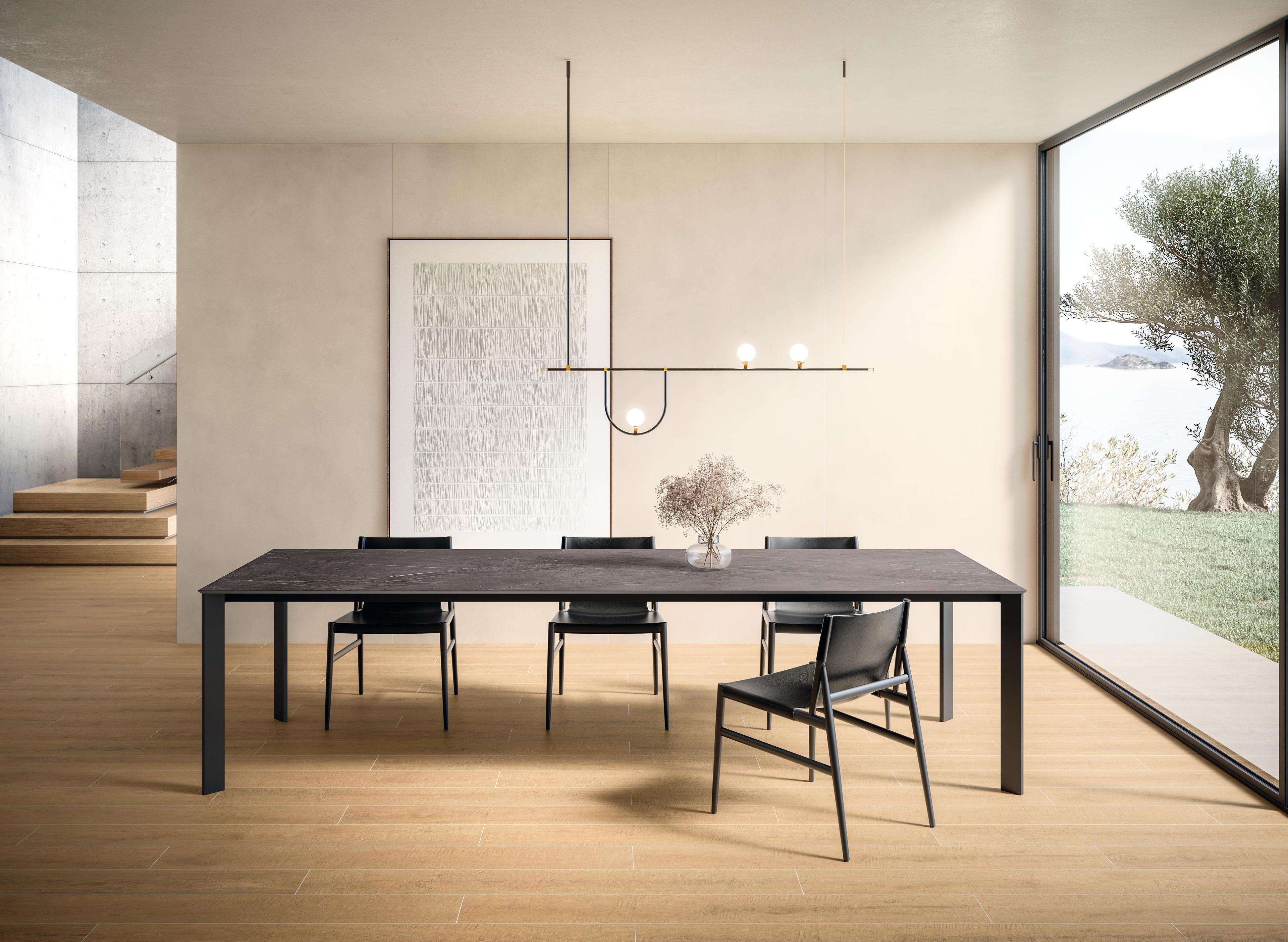
AtlasConcorde_BoostVision_000_02_Grey_Glow_Ash_Corten_ORIZZONTALE

Installation system and design responsibility

Drive-over suitability does not depend on the ceramic product alone. Even tiles with adequate mechanical characteristics can be damaged if the substrate settles or if voids remain between the covering and the support. The final performance depends on the correct design and execution of the entire construction build-up.

The system must therefore be defined through coordination between designer, contractor, installer and site management, specifying supports, installation materials, gradients, movement joints, water collection and conditions of use.

Installation on screed for driveway areas

For driveways, parking areas, courtyards and garage accesses, bonded installation on screed is the system to consider when the surface has to withstand vehicle traffic. Thickness, size, adhesive and grouting material must be defined according to the expected loads and the characteristics of the support, following the technical instructions of the manufacturers involved in the installation system.
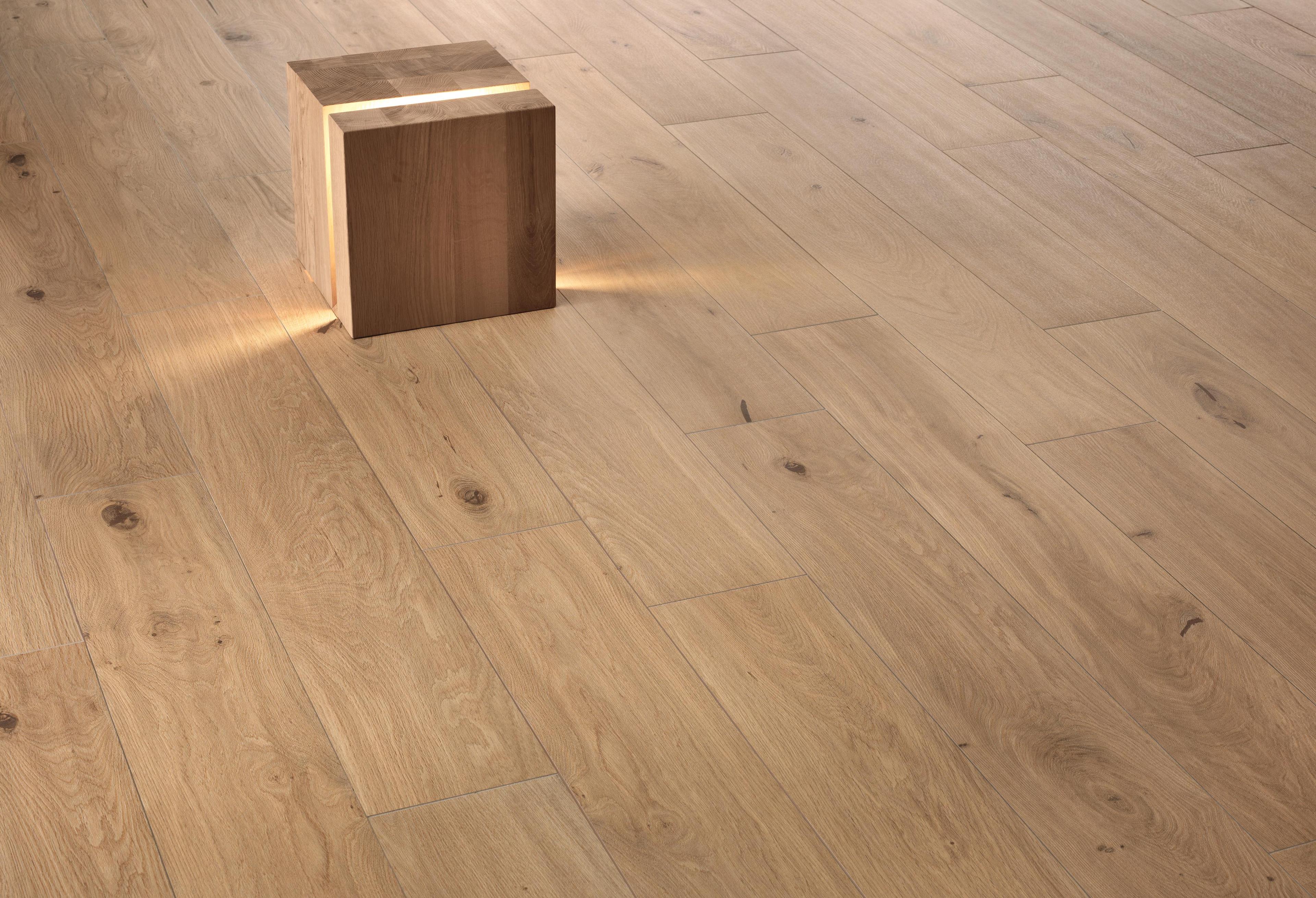
Installation must ensure uniform adhesion and the correct transfer of loads to the support. In the bonded installation of drive-over surfaces, the double-buttering technique, with adhesive applied to the substrate and to the back of the tile, promotes the complete wetting of the surface and reduces the presence of voids that could cause breakage in the event of impact or concentrated loads.

The screed and the underlying layers must be designed according to the expected traffic, while gradients, grout joints and movement joints must be coordinated with the geometry of the area and with environmental conditions. Choosing a drive-over tile cannot compensate for any structural or constructional shortcomings in the substrate.

A further critical point concerns water management. Insufficient gradients, poorly coordinated drains or discontinuities at junctions can generate standing water and infiltration. When the project calls for permeable driveway outdoor paving, the capacity to drain water does not depend on the tile alone, but on the overall design of the system, which must coordinate gradients, grout joints, channels and collection points.

It is also necessary to distinguish systems intended for vehicle traffic from those designed for pedestrian passage alone. Dry installation on grass, sand or gravel and raised installation are not suitable for driveway areas, even when 20 mm thick slabs are used.

In a project that alternates vehicle and pedestrian zones, the change of system must be clearly represented in the drawings and carefully resolved at the junction points.

These aspects take on particular importance, for example, for porcelain tile garage flooring or for a communal parking area, where repeated passage, steering, tire marks and possible oily residues are concentrated. The choice of finish and the definition of cleaning procedures must therefore be consistent with the intensity of use and with the level of maintenance planned.

AtlasConcorde_MarvelT_005_05_HaloSand
AtlasConcorde_BoostVision_000_03_Grey_Glow_Ash_Corten
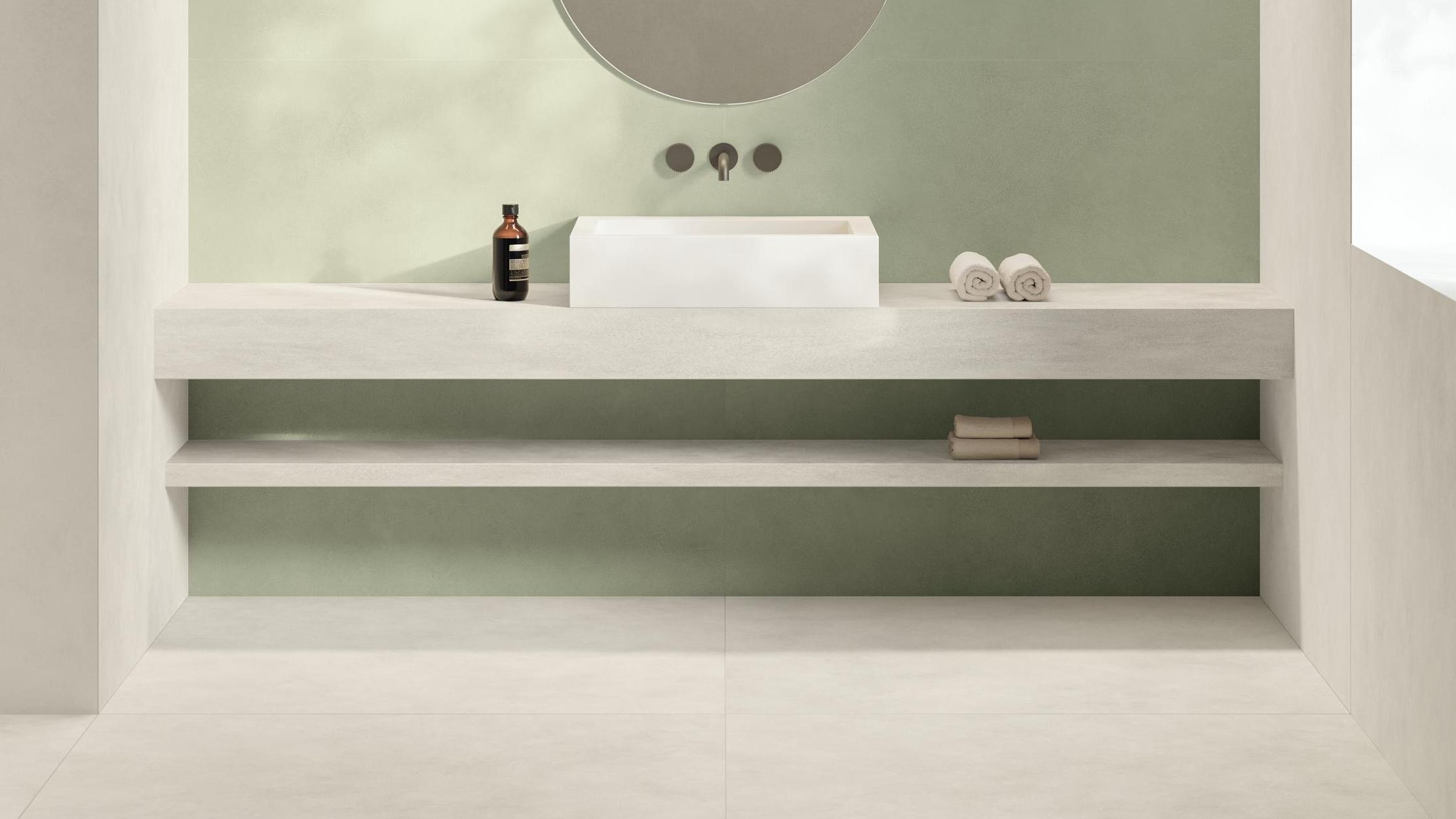
AtlasConcorde_BoostHux_002_00_Dune_AgedGreen
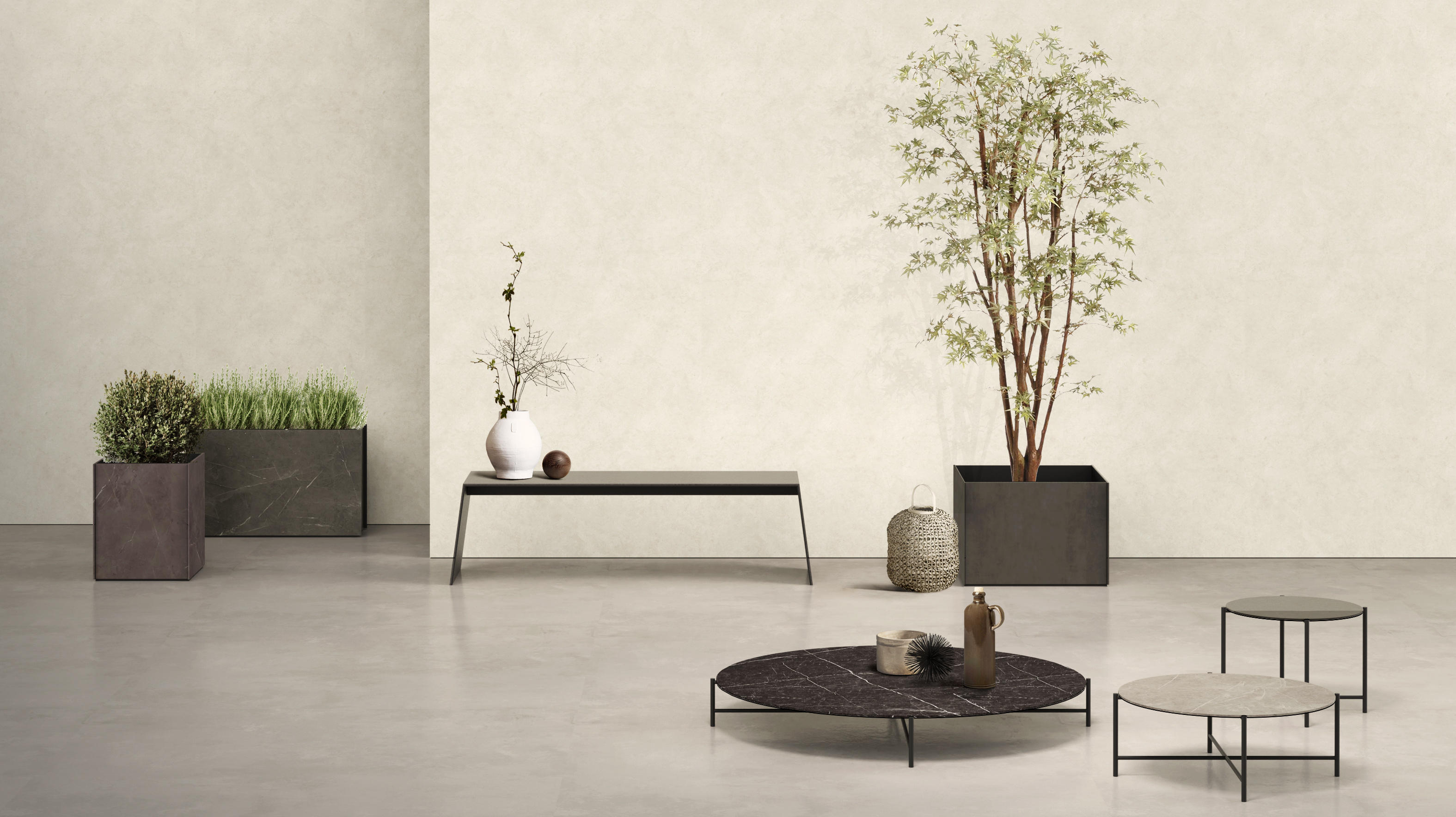
AtlasConcorde_BoostIcor_000_02_Hero_Bone_RailwayBone

Design continuity between driveway areas and outdoor spaces

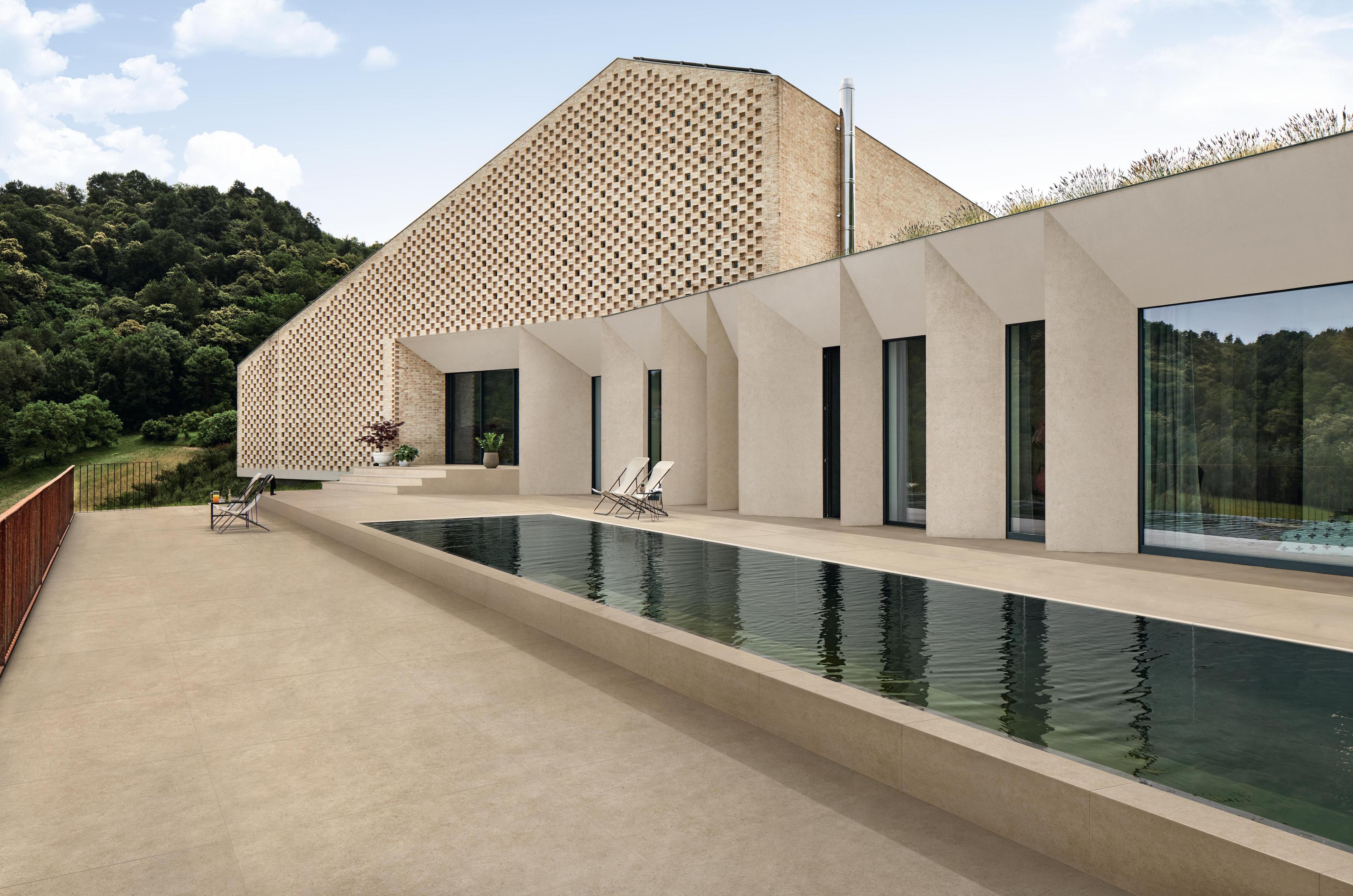
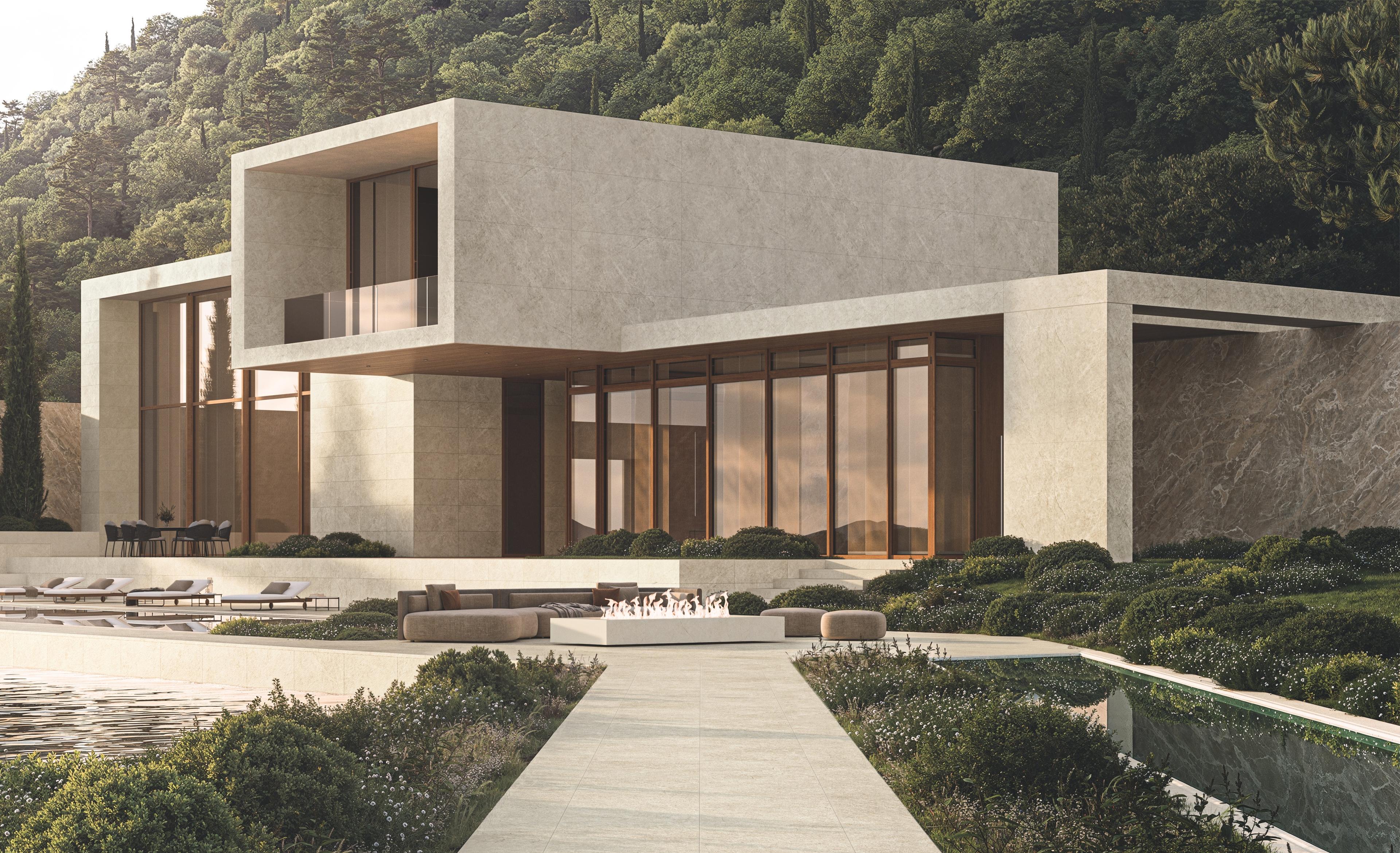
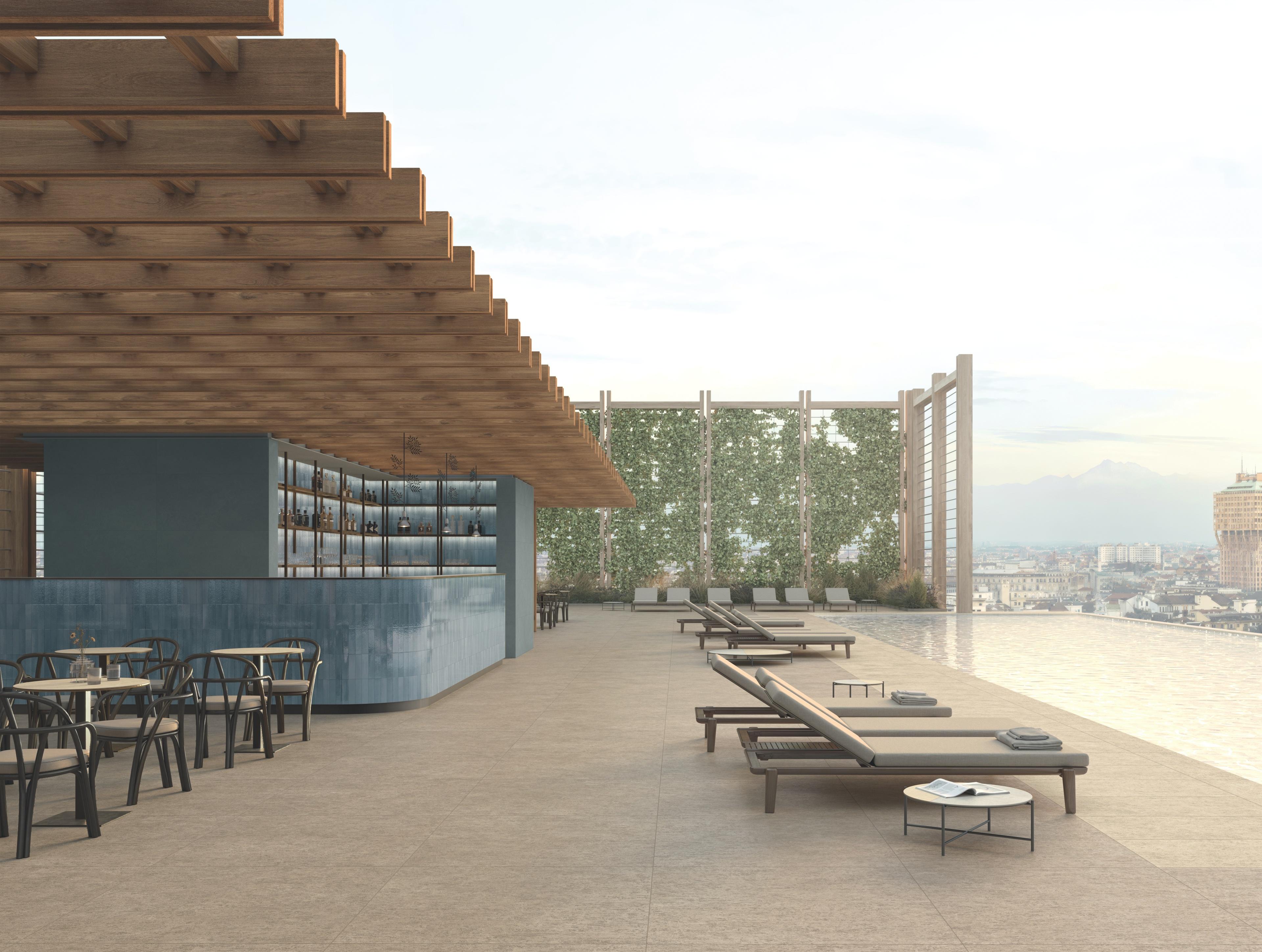
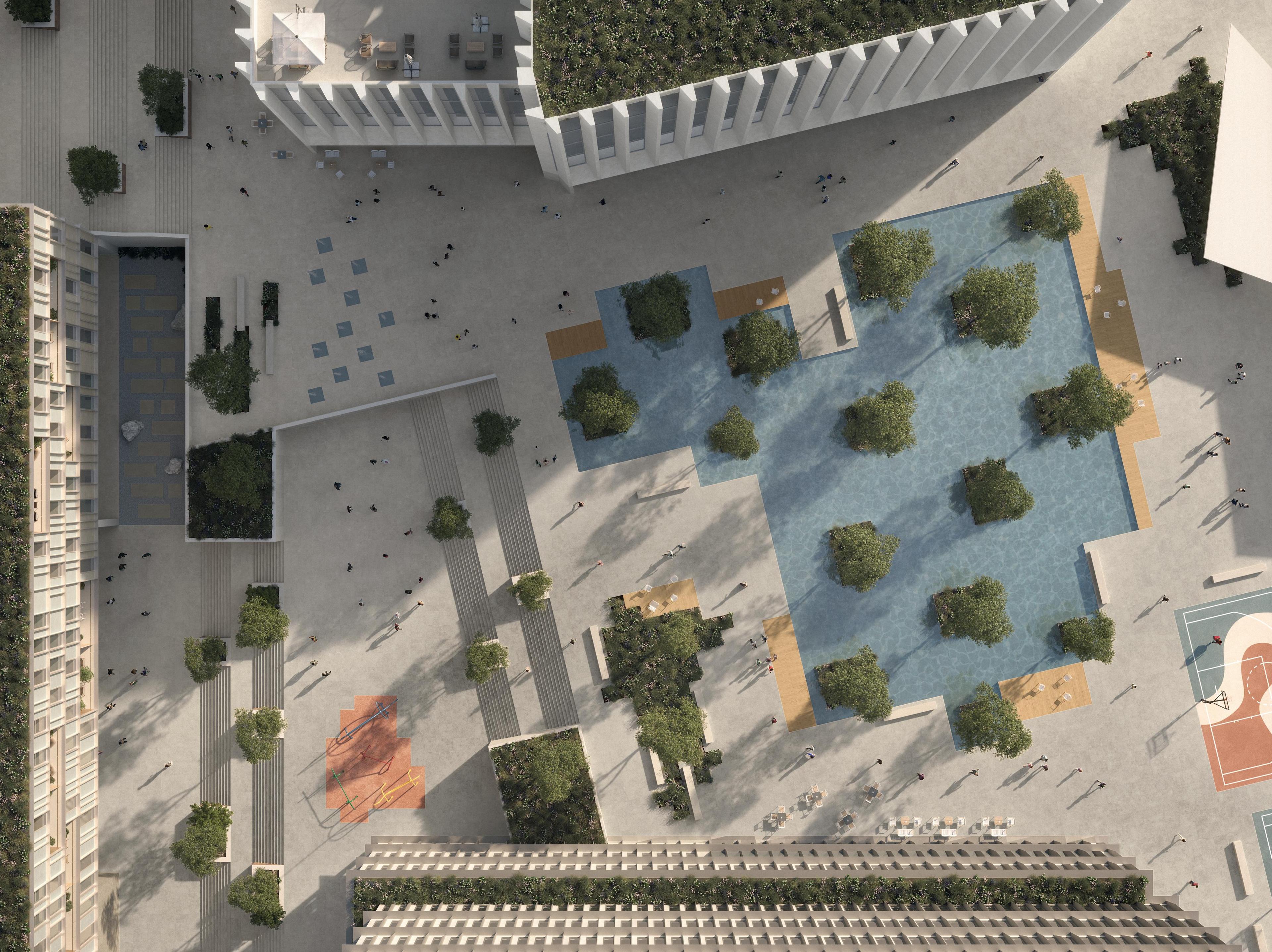
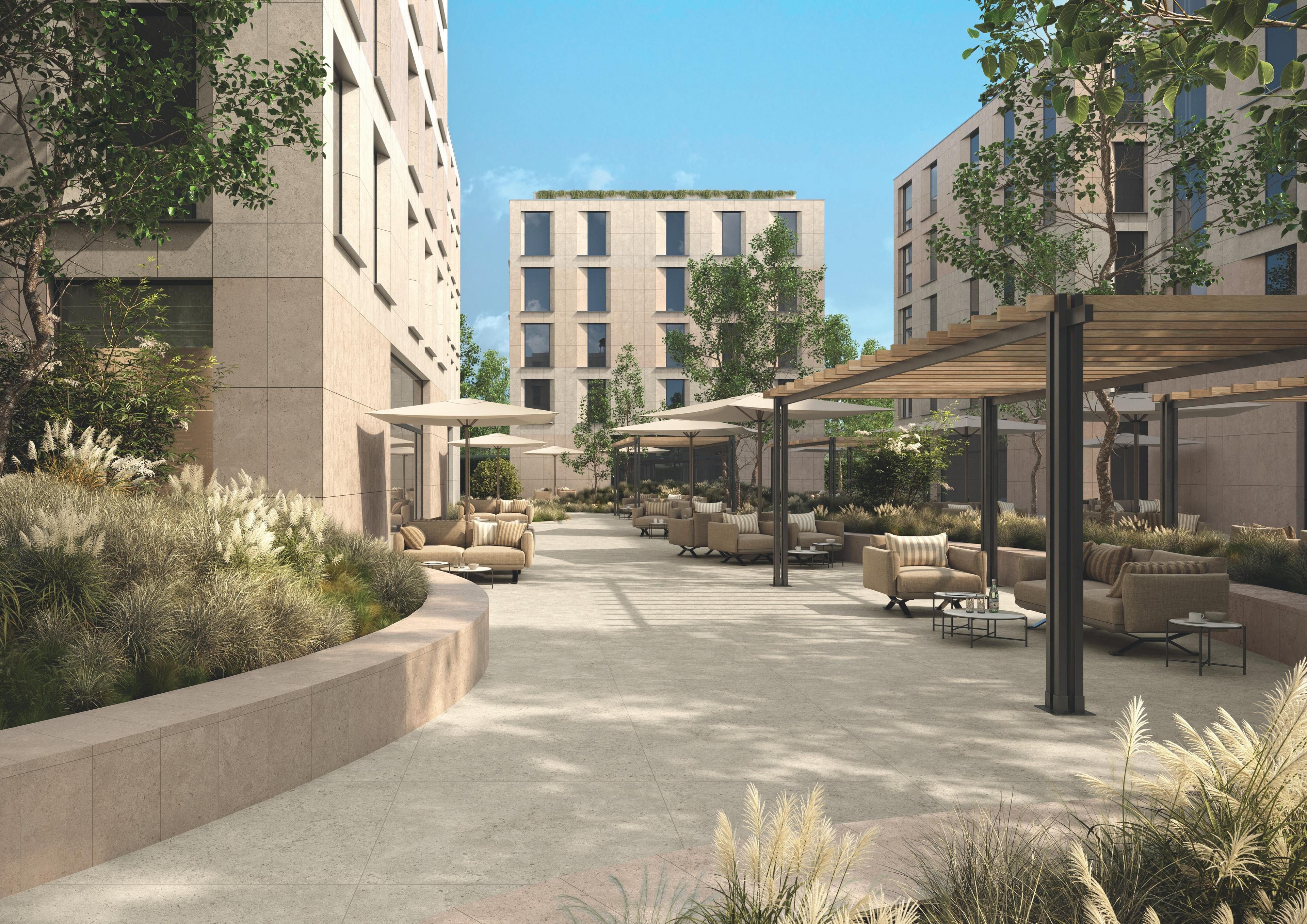
Driveway paving need not necessarily be treated as an element separate from the design of the outdoor spaces. In residential complexes, hospitality facilities and mixed-use properties, vehicle accesses, pedestrian routes, porticoes, terraces and communal areas all contribute to the same architectural perception.

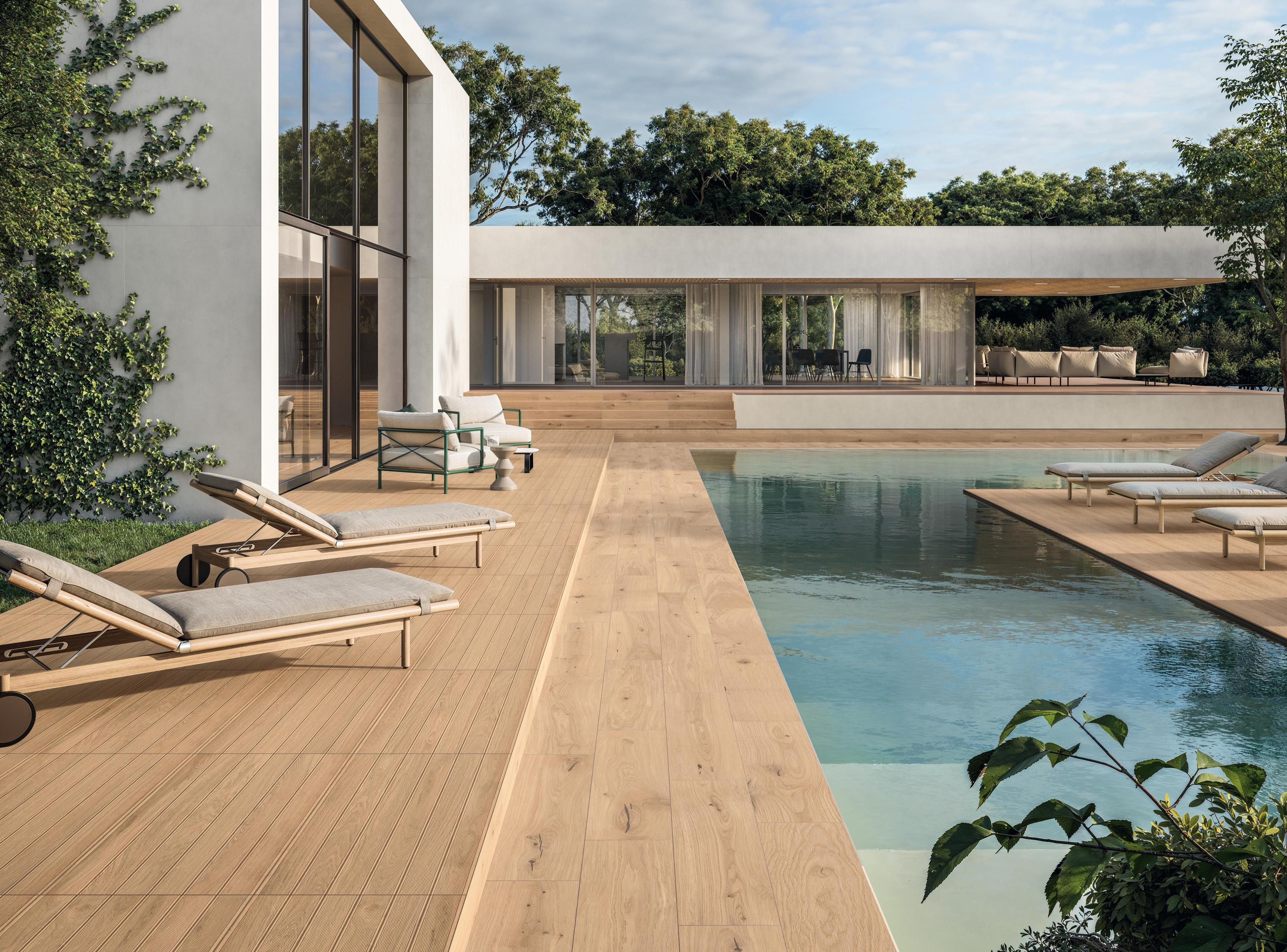
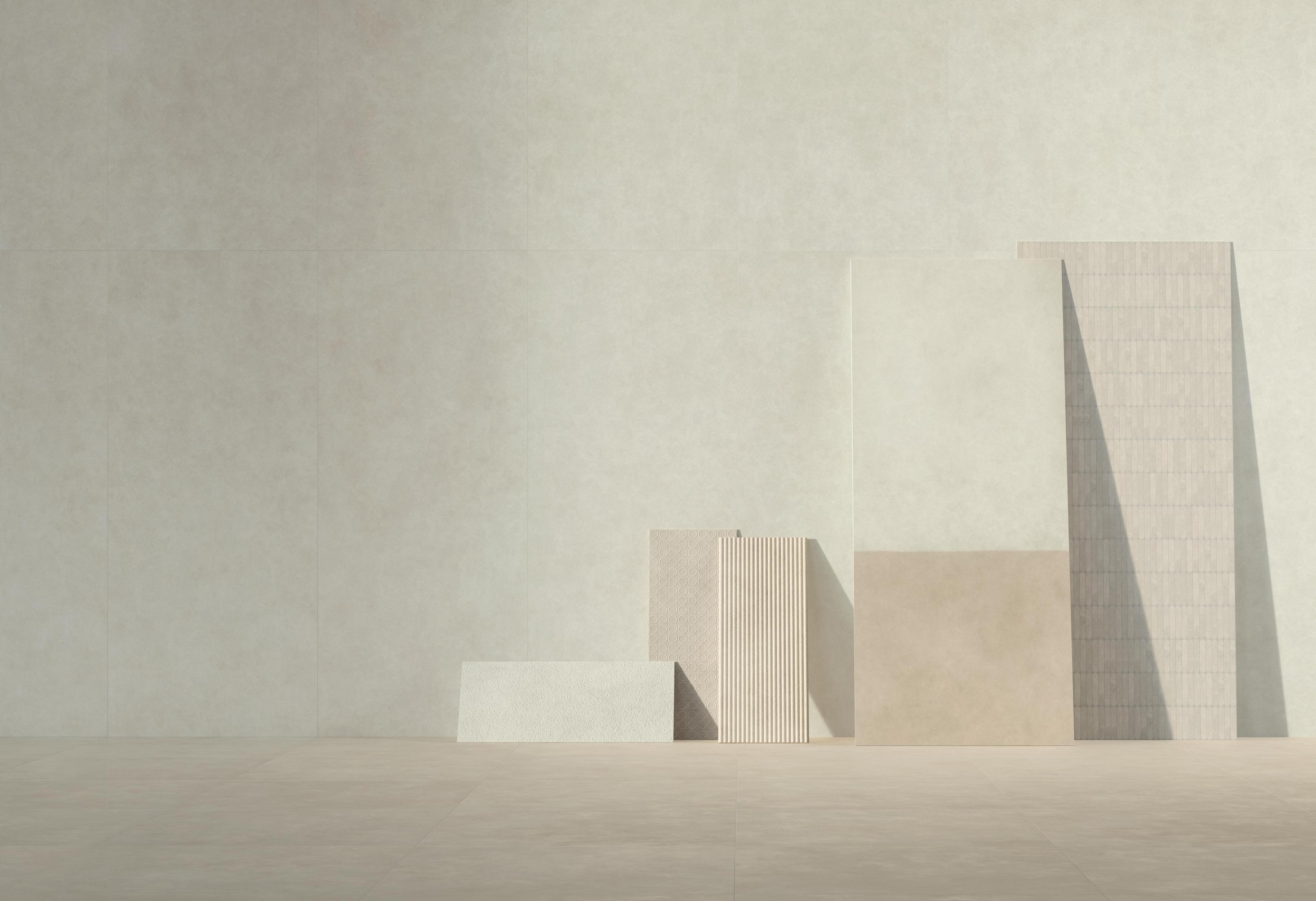
The availability of coordinated collections, finishes and thicknesses makes it possible to build continuity between surfaces subject to different technical requirements, varying the item or the installation system without interrupting the overall language.

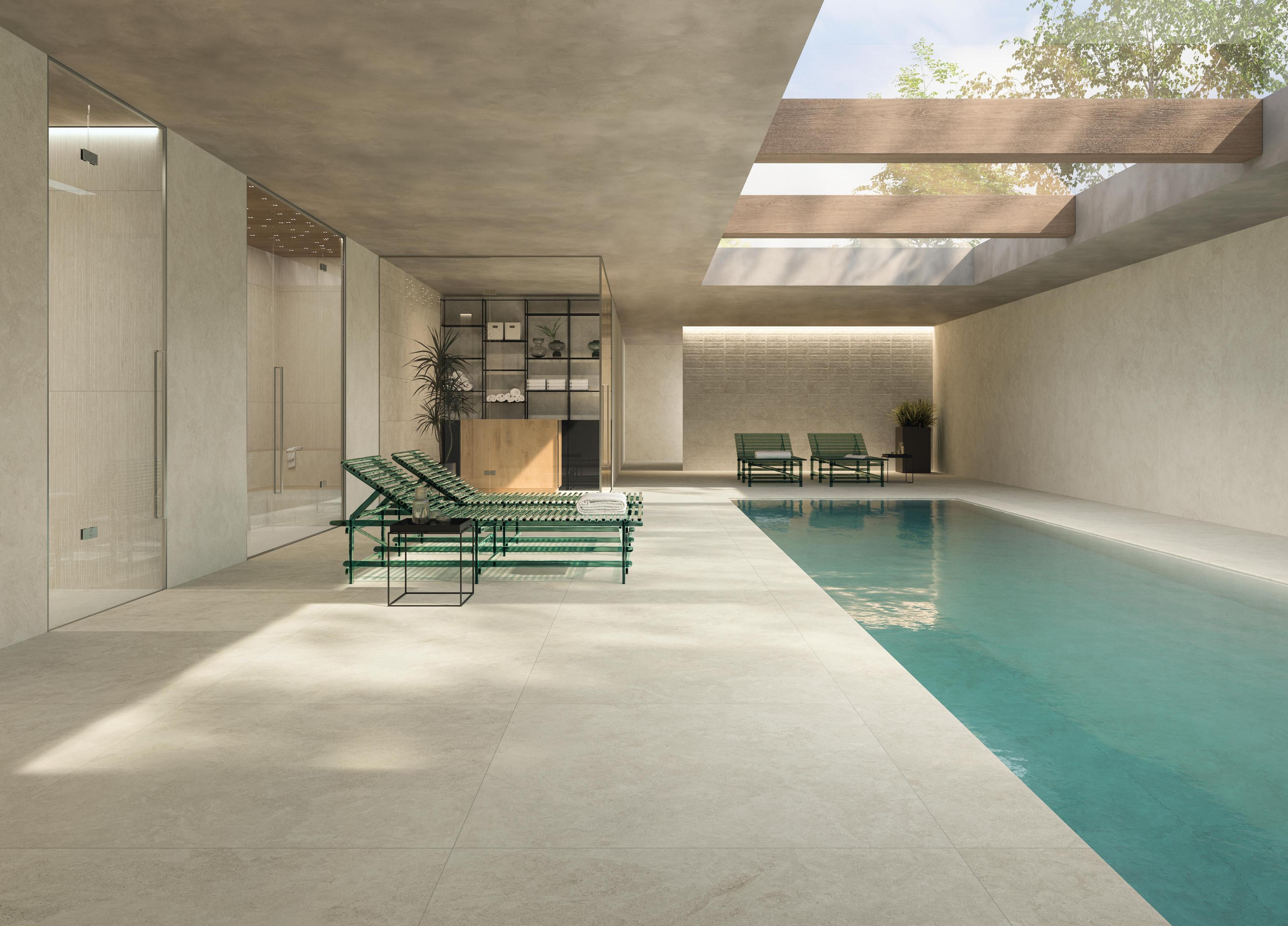
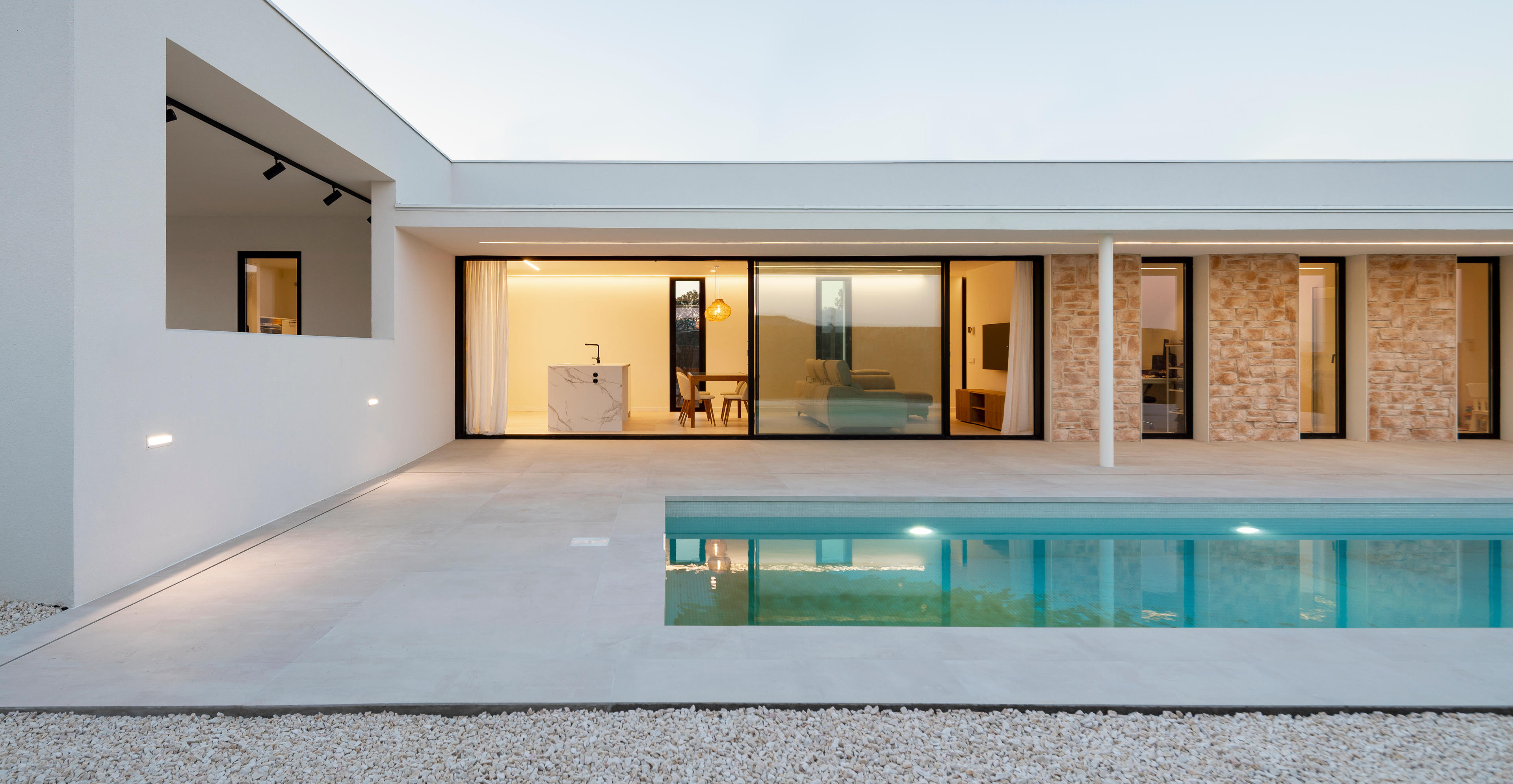
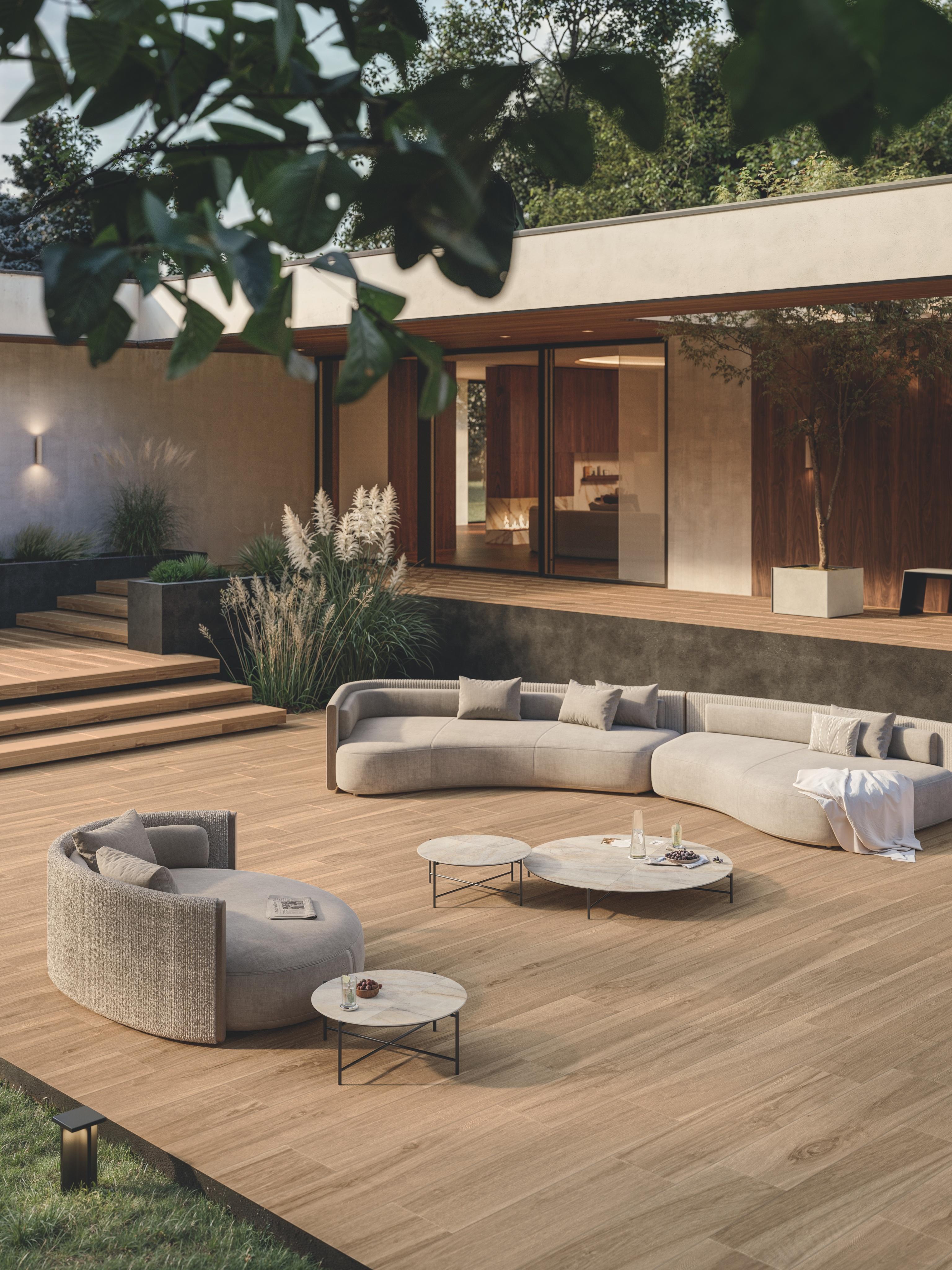
In residential projects, driveway outdoor paving for gardens can connect the vehicle access, the walkways and the green areas through a consistent material palette. The same principle applies to driveway paving for covered outdoor areas, where finish and performance must be calibrated on the transition between covered and uncovered zones and on the different wet conditions.

Effects and technologies for coordinating outdoor surfaces

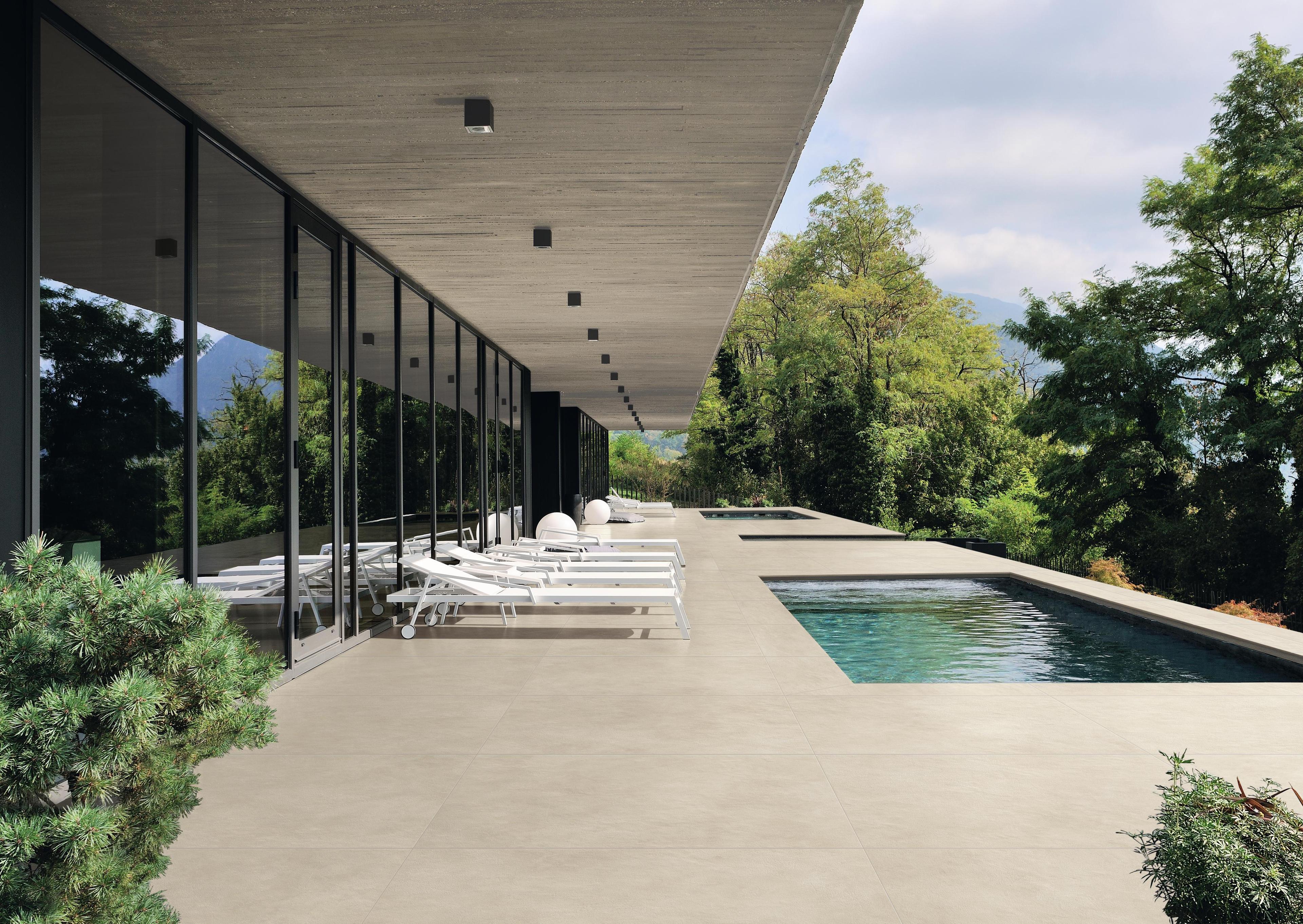
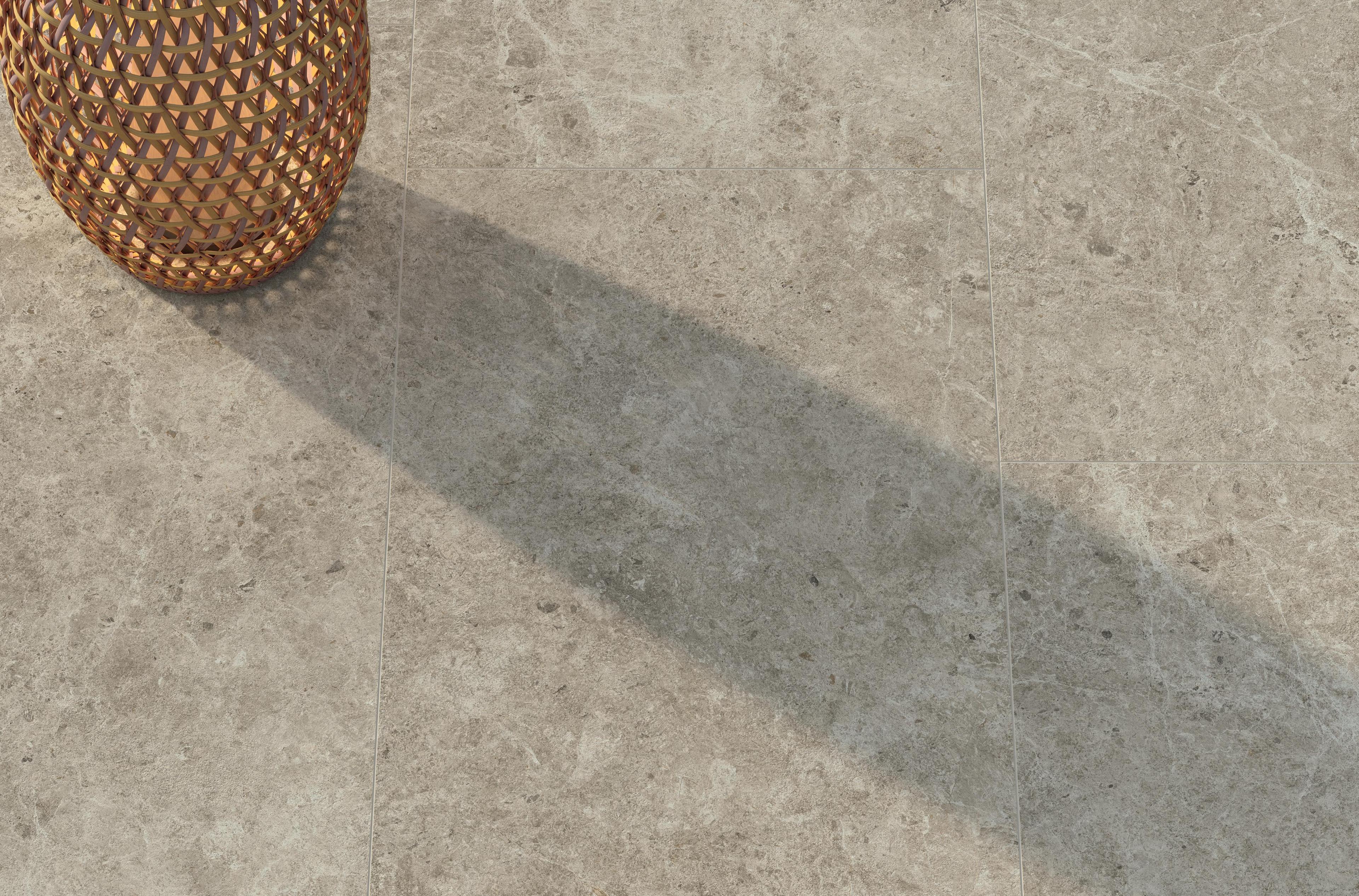
The stone, concrete and wood effects in the Atlas Concorde outdoor range make it possible to relate the flooring to façades, volumes, landscape and building materials. The aesthetic choice must however follow, and not precede, the verification of the technical suitability of the specific item.

This design continuity therefore arises from selecting products compatible with each intended use and subsequently building a shared palette. Not all items in a collection in fact have the same thickness, the same finish or the same intended use.

In the Atlas Concorde offering, some items with an Outdoor Sensitech finish, also available in 20 mm thickness, can be used in driveway areas with bonded installation on a suitably designed substrate. The technology combines the R11 C classification with a surface designed to reconcile slip resistance and ease of cleaning, characteristics that are relevant in the design of non-slip outdoor driveway flooring. Suitability for vehicle traffic does not, however, depend on Sensitech in itself, but on the specific item, the thickness and the installation system.
In the work of general contractors and construction companies, the coordination between performance requirements and architectural language makes the specification clearer and helps to limit problems during execution. On the property management side, a correct initial definition of the paving reduces the risk of corrective work, makes maintenance costs more predictable and helps to preserve the perceived quality of communal spaces over time.
The quality of driveway flooring is not a characteristic of the product: it is the result of a system designed with coherence, from the ceramic body to the detail on site.

Contact Us

Please select one of the categories below